- Sydney’s theatres have had a bruising time recently, with two cancellations causing alarm.
- But one show at the Capitol Theatre is roaring a very different message, with packed houses.
- Lion King has just released its last tickets after a record breaking run in Sydney.
Sydney’s theatre industry has lately had more drama offstage than on it. The cancellation of Beetlejuice’s Sydney season was followed by the news that Waitress, starring Natalie Bassingthwaighte and Rob Mills, would not make it north after its Melbourne run. Add the premature closure of Back to the Future and suddenly everyone was asking the same uncomfortable question: is Sydney theatre in crisis?
The gloomy headlines were understandable. Producing a major musical is eye-wateringly expensive, households are watching their spending and even experienced producers are finding that the economics no longer always add up.
But perhaps Sydney theatre could use a little less doom and a little more Hakuna Matata.
Last week, I spent $526 on four tickets to Disney’s The Lion King. That is not an insignificant amount of money. It is a handsome dinner for four, a hotel stay or, depending on the suburb, almost enough to buy half a smashed avocado.
Yet I was certainly not alone in opening my wallet. The Capitol Theatre was packed. Not “comfortably busy”. Packed. Every bar was buzzing, every staircase was busy and every few metres another family seemed to be negotiating the purchase of a Simba plush toy. I only just resisted one myself.
This was not an opening-night audience filled with invited guests and industry insiders. It was a paying crowd ready to spend, be entertained and carry the experience out into the restaurants, bars, hotels and shops surrounding the theatre.
And spend they did.
The king of Sydney’s theatrical jungle
The Lion King has become the fastest-selling show in the Capitol Theatre’s history, selling out eight performances a week since opening in April.
Its latest extension is particularly telling. A production that was originally expected to finish weeks earlier will now play until Sunday, November 1, with the final release covering performances from October 7.
In other words, while some productions are cancelling seasons, The Lion King is adding weeks. This is not evidence that the theatre business is easy. It is evidence that Sydney audiences will still enthusiastically pay for an event that feels unmissable.
And The Lion King feels unmissable from the moment the show begins.
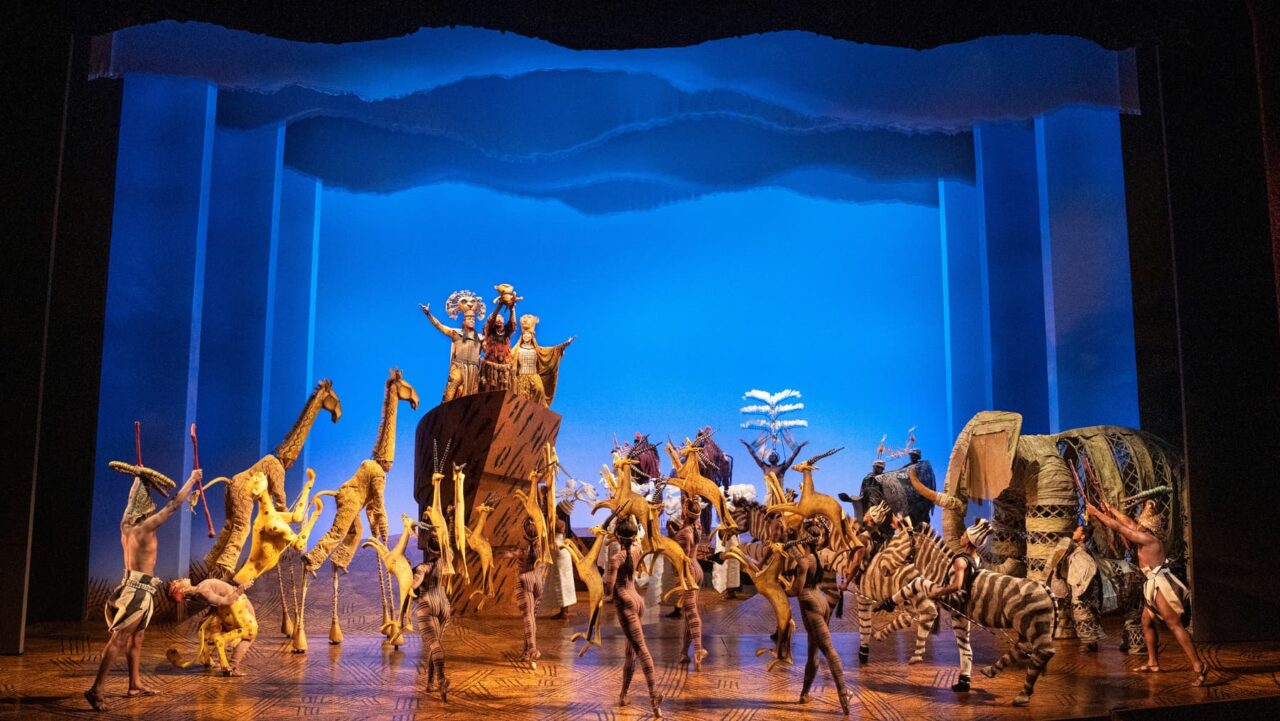
The first animals do not simply appear on stage. They arrive throughout the auditorium, turning the entire theatre into the Pride Lands. The magnificent Capitol Theatre seems to disappear as elephants, giraffes, birds and antelope move among the audience.
It is a thrilling opening because it delivers something that streaming services, cinema screens and even the most sophisticated virtual reality headset cannot reproduce: the electricity of something extraordinary happening live, in the room, right in front of you.
From there, the production barely loosens its grip.
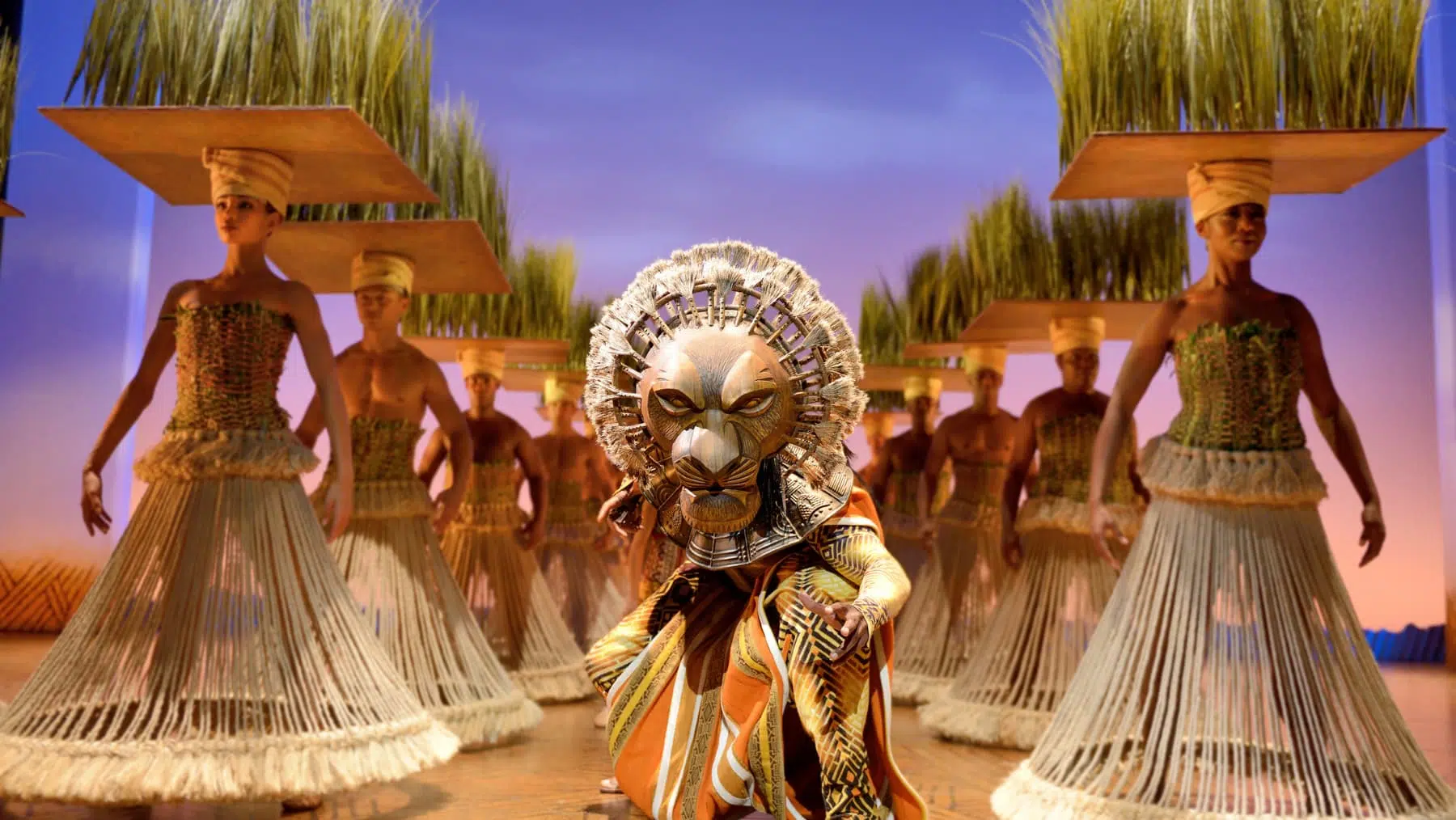
Julie Taymor’s celebrated masks, puppets and costumes allow us to see both the animal and the human performer at once. Richard Hudson’s scenery is imaginative rather than overburdened, while the music blends Elton John and Tim Rice’s familiar songs with the magnificent rhythms and choral power of African musical traditions.
There is no desperate attempt to disguise the theatrical machinery. We see the performers operating the puppets. We see the sticks supporting the birds and the wheels beneath the stampeding wildebeest. Yet the illusion becomes more powerful precisely because our imaginations are invited to participate.
As our review of the production noted, this is pure theatre magic without the digital tricks.
Worth every cent
At $131.50 each, our tickets required a moment’s thought. But as I left the Capitol Theatre, surrounded by an excited audience still discussing favourite scenes and performances, I had another, much stronger thought: that was worth every cent.
That distinction matters. Audiences are not necessarily refusing to spend. They are becoming more selective about where they spend. A production must promise and deliver an experience big enough to justify the ticket, the transport, dinner, parking and possibly accommodation.
The Lion King does exactly that. It offers spectacle without sacrificing heart. It gives adults the nostalgic pleasure of returning to a story they know while introducing children to the particular magic of live performance. It is familiar enough to feel reassuring but inventive enough to feel completely new.
It also has a formidable cast.
Buyi Zama, appearing as Rafiki for the third Australian tour, commands the stage with warmth, wisdom and glorious vocal power. Nick Afoa completes his own theatrical circle of life, graduating from Simba in the 2013 production to Mufasa in 2026. Aphiwe Nyezi and Emily Nkomo bring youth and emotional energy to Simba and Nala, while Daniel Frederiksen has delicious fun with Scar’s villainy.
Jamie McGregor and Rutene Spooner provide irresistible comic relief as Timon and Pumbaa, assisted by Benn Welford’s wonderfully fussy Zazu. Together, the principals and enormous ensemble make the production feel both epic and joyfully human.
Tourists packed the house
There was another reason the packed Capitol Theatre should attract the attention of governments. Many of the people seated around me were visitors from Singapore, Japan and the United States. They had not simply purchased theatre tickets. They were staying in Sydney, eating in Sydney restaurants, travelling on Sydney transport and spending money throughout the city.
A major musical does not exist in isolation. Its economic effect spreads well beyond the box office.
Producer Michael Cassel — whose Australian credits include Hamilton, MJ the Musical and & Juliet — is among those pushing for tax concessions to help attract and sustain major live productions. It is a worthy campaign.
Governments already recognise that screen productions generate jobs, skills, tourism and international attention. Large theatrical productions do the same. They employ performers, musicians, technicians, dressers, designers, stage managers, marketers and front-of-house staff. They fill restaurants before performances, bars afterwards and hotel rooms throughout a season.
Government support should not mean shielding every show from commercial reality. Not every musical will become a hit, just as not every film receiving production incentives becomes a blockbuster.
It means recognising that theatre is cultural infrastructure and an important part of the visitor economy.
The NSW Government, through Destination NSW, is already supporting The Lion King’s Sydney season. The extraordinary audience response demonstrates why that support makes sense . And why a more ambitious national framework deserves serious consideration.
The lesson in this Circle of Life
So, what is the lesson from this theatrical Circle of Life? It is not that Sydney theatre has nothing to worry about. Rising production costs and cautious consumer spending are real. Recent cancellations have left theatres dark, audiences disappointed and hundreds of creative workers facing uncertainty.
But it is equally wrong to declare the industry doomed.
Sydney has the audiences. It has magnificent venues, talented producers and world-class performers. It also has millions of visitors looking for memorable experiences after the harbour photograph has been taken and the Opera House steps have been climbed.
What Sydney needs is a stronger pipeline of productions capable of becoming genuine events, supported by policies that recognise the enormous economic risk involved in bringing them here.
The Lion King is the proof roaring from the Capitol stage eight times a week. If you have not seen it, our advice is simple: go. The final tickets are now on sale and, judging by the crowds, they will not remain available for long.
Yes, you may spend more than you planned. You may also find yourself gazing dangerously at a cuddly lion in the merchandise stand.
But when the animals enter the auditorium, Rafiki’s voice rises and the Pride Lands unfold before you, your worries will disappear for a few wonderful hours. You will almost definitely feel the love tonight.
The cast
Buyi Zama (Rafiki), Nick Afoa (Mufasa), Daniel Frederiksen (Scar), Benn Welford (Zazu), Aphiwe Nyezi (Simba), Emily Nkomo (Nala), Jamie McGregor (Timon), Rutene Spooner (Pumbaa), Ezra Williams (Shenzi), Winston Hillyer (Banzai) and Mat Verevis (Ed).
The ensemble includes Shugri Abdi, Mario Acosta-Cevallos, Claire Abaijah-Griffin, Tara Bajan, Evangeline Batucan, Sophie Dadge, Ed Deganos, Leorate Dibatana, Junior Dilape, Matt Domingo, Joe Gaudion, Mukelisiwe Goba, Chaska Halliday, Jayme-Lee Hanekom, Annie-Lenore Hanman, Hamish Johnston, Khaya Mniki, Iteboge Modipane, Kearabetswe Mogotsi, Steven Mokone, Lwazi Mzimase, Buhle Nkomo, Rania Potaka-Osborne, Jack Rowan, Jacob Rozario, Laila Salloum, Asmara Soekotjo, Chemon Theys, Clifford Tlomatsana, Dean Vince, Tarisai Vushe, Brendan Xavier, Asemahle Xenti and Angel Zum.
What, where and how much?
What: Disney’s The Lion King
Where: Capitol Theatre, 3–15 Campbell Street, Haymarket
When: Eight performances a week, playing until Sunday, November 1, 2026
Running time: Approximately two hours and 30 minutes, including interval
Tickets: Approximately $60–$330, subject to performance, seat and availability
Bookings: The Lion King’s official Australian website
More information: Read our complete Sydney guide, including history, showtimes and transport advice.