Fiddler on the Roof is unmistakably a Jewish musical. Its characters, humour, rhythms and rituals come from a particular culture and time.
Yet the achievement of this exuberant Sydney production is to demonstrate that the story of Fiddler on the Roof has never belonged to one community. It is about the difficult balancing act performed by every family and every society: how to preserve the things that give us identity while accepting that the world does not stand still.
At the start of the show, Tevye explains that life in the Soviet village of Anatevka is like being a violinist balanced precariously above the ground, trying to play a pleasant tune without breaking his neck.
The haunting violin music runs throughout this musical. And the fiddler is playing on a grass-covered roof at the start of the show. It’s an exercise in stagecraft that sets the scene for the rest of this show.
Yet this is a musical filled with songs you instantly recognise. Matchmaker, Matchmaker, If I were a rich man, Sunrise, Sunset have become universally known songs, though you may not have known where they came from.
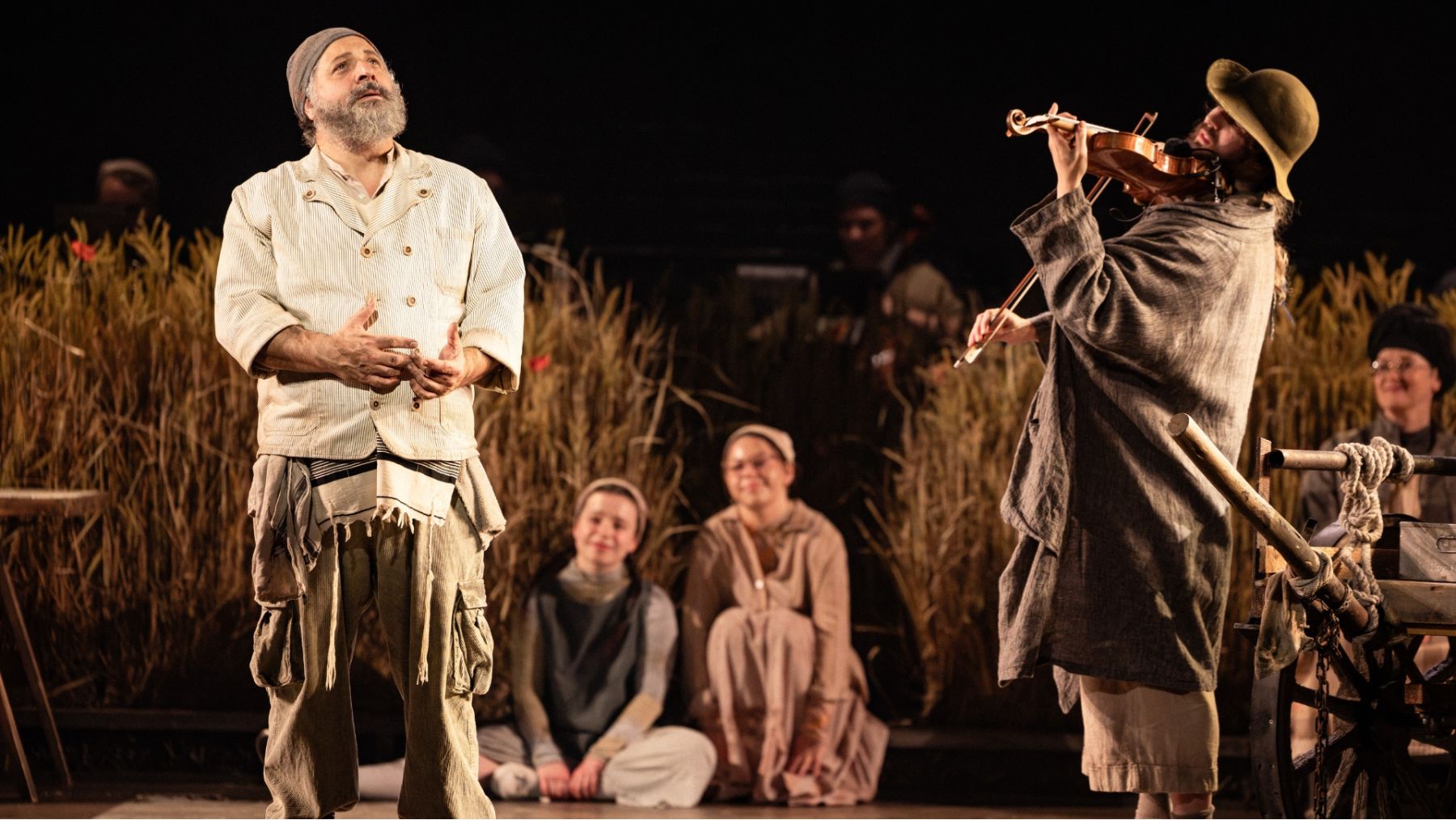
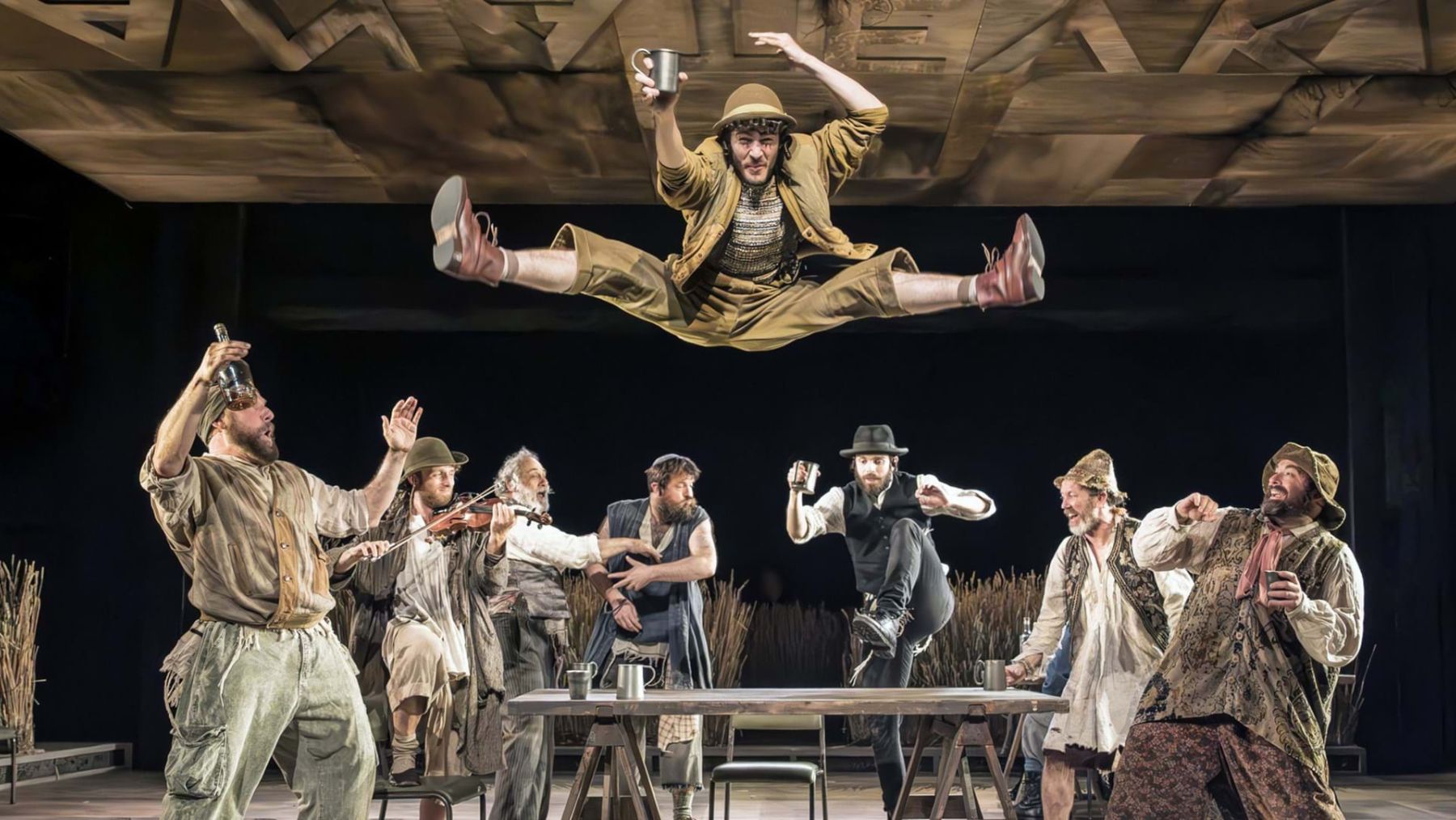
Jordan Fein’s production, arriving after acclaimed and sold-out British seasons, is driven by the tremendous energy of its Australian company. A whole village is brought to life onstage.
The company gives Anatevka its movement, mischief and warmth. Weddings erupt, arguments tumble over one another and traditions are carried not as museum pieces but as the habits of people who depend upon them.
That ensemble energy is essential. Fiddler could easily be ponderous and overbearing. Instead, it is engaging and instantly likeable.
At the centre of the story is Troy Sussman as Tevye, the milkman attempting to maintain authority over his household and his traditions. Sussman has the vocal and physical presence to command the stage, but his most appealing quality is the humanity beneath his bluster.
His Tevye is endearing because he is forever negotiating: with his wife, with his daughters, with the village and with the Almighty. “On the other hand…” becomes his lament as he tries to uphold tradition. But those negotiations gradually reveal a man discovering that love may demand flexibility.
Alexis Fishman’s Golde provides a formidable counterweight. The marriage between Tevye and Golde is one of the musical’s quieter miracles: a relationship formed by custom that has somehow, over decades, become love. Their exchanges carry the comfortable combativeness of two people who know one another completely. When they ask, in “Do You Love Me?”, whether duty has been transformed into affection, we are on tenterhooks. Thankfully, there is a happy ending here.
Sigrid Thornton brings authority and comic precision to Yente, while John Waters gives Lazar Wolf an imposing, recognisably human presence rather than reducing him to a romantic obstacle. Freya Boltman, Ellen Ebbs and Caity Plummer, as Tzeitel, Hodel and Chava, make Tevye’s daughters distinct individuals. Each challenges tradition differently, and each forces Tevye to redraw the boundary between what he can tolerate and what he believes he cannot.

Internationally recognised violinist Ben Adler plays the fiddler, and is masterly at both playing his part and his instrument.
Then there is the real star of this show: the score.
Jerry Bock’s music and Sheldon Harnick’s lyrics are astonishingly durable. Tradition, To Life and Sunrise, Sunset are not simply famous show tunes; they reveal the humanity of the people singing them.
In this production, the music is fresh and familiar. The dancing is similarly vital. Julia Cheng’s choreography gives the company a muscular, propulsive physical presence, while Tom Scutt’s design places the story within a world that can appear secure one moment and dangerously fragile the next.
The first half is full of jokes, courtship and bustling village life. But Fiddler has always concealed a gathering darkness. The daughters’ choices test Tevye’s understanding of tradition; the violence directed at Anatevka exposes the deadly consequences of prejudice in public life.
What begins as a domestic comedy becomes a story of intimidation, persecution and displacement. That shift has resonance in Sydney in 2026.
Australia is currently confronting antisemitism not as an abstract historical subject but through a Royal Commission on Antisemitism and Social Cohesion. Established in January 2026, the commission has been examining the circumstances and wider social conditions surrounding the antisemitic attack at Bondi Beach in December 2025, with its final report due later this year.
It would be crude to turn Fiddler on the Roof into a piece of political theatre in this context. But neither can an audience watch Jewish families threatened, attacked and ordered from their homes without feeling there is a message here.
The musical’s value at this moment is that it demonstrates just how much humanity can continue to exist in adversity. Tevye’s family and their fellow villagers of Anatevka are dirt poor. But these are people who flirt, quarrel, pray, gossip, celebrate and make terrible jokes. The show engages their humanity before showing how swiftly a society can decide that they do not belong.

Despite this dark side, the production remains joyful. Jewish history is not presented solely through victimhood. The people of Anatevka possess music, faith, humour and an extraordinary capacity for celebration.
The balance between joy and danger is what gives the final scenes their power. The people leave Anatevka, but remain true to themselves. The fiddler follows.
Sydney needs this production to succeed. There has been a lot written about the parlous state of live theatre in our city. Major commercial theatre flourishes when audiences turn up for ambitious, full-bodied productions in which large casts, live music, choreography and design combine to create something that cannot be replicated on a screen.
The Theatre Royal has a company on its stage giving everything: singing with force, dancing with abandon and transforming a familiar musical into a living communal event.
At a time when producing large-scale theatre is expensive and precarious, a hit of this kind creates employment, builds audiences and demonstrates that Sydney still has an appetite for substantial musical storytelling.
More importantly, Sydney audiences need it. We need nights in which hundreds of strangers laugh together, fall silent together and rise together.
Fiddler on the Roof does not offer an easy answer to the conflict between tradition and change. Tevye bends, but not infinitely. His daughters move forward, but not without loss.
With its spirited cast, glorious score and emotional directness, Fiddler on the Roof is exactly the kind of generous, large-hearted musical Sydney theatre needs.
Fast facts:
- Venue: Theatre Royal Sydney is located at 108 King Street, Sydney.
- Run: Until 3 October 2026
- Run time: 2 hours 40 minutes. (Act 1: 90 minutes, followed by a 20-minute interval, Act 2: 45 minutes)
- To book: theatreroyalsydney.com/shows/fiddler-on-the-roof/