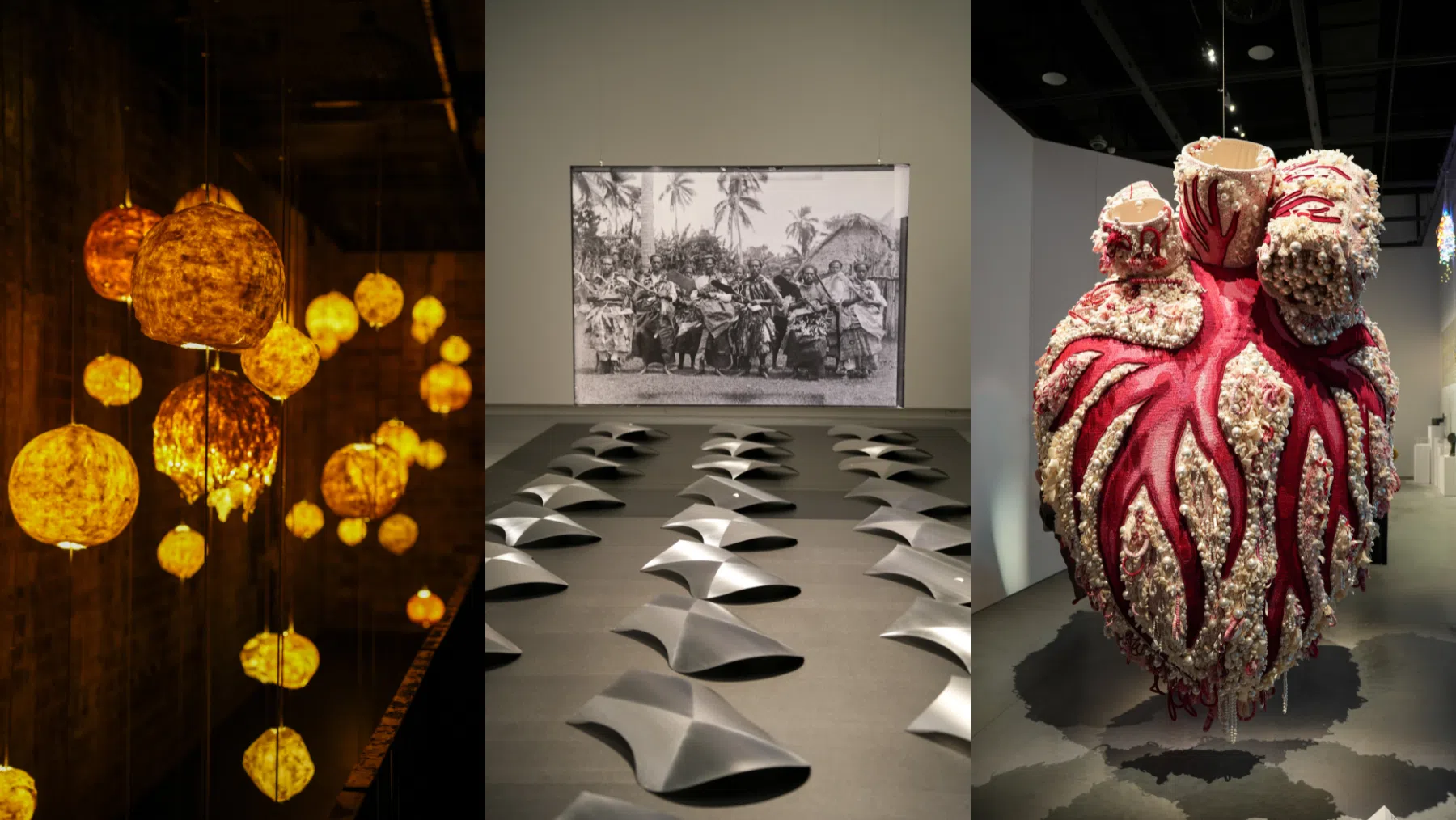
The first thing you notice when you arrive at White Bay Power Station, headquarters of the 2026 Biennale of Sydney, is the scale of the place. Even before the art comes into view, the towering machinery, steel beams and cavernous interior hint that the 25th Biennale is going to be something more than a traditional gallery experience.
The Sydney Travel Guide was invited on a full-day preview tour ahead of the Biennale’s official opening this weekend. We think Sydney is in for a spectacular experience. Titled Rememory, the 2026 edition is led by Artistic Director Hoor Al-Qasimi and takes its name from Toni Morrison’s concept that memories are not simply recalled, but lived and revisited across time.
Al-Qasimi has already proved a controversial choice given her membership of one of the United Arab Emirates leading dynasties. But let’s put that to one side.
The exhibition runs from 14 March to 14 June and spans five venues across the city: White Bay Power Station, the Art Gallery of New South Wales, the Chau Chak Wing Museum at the University of Sydney, Campbelltown Arts Centre and Lewers: Penrith Regional Gallery. Entry to all exhibitions is free.

What you’ll discover as you navigate this year’s Biennale of Sydney is a beautifully curated collection of untold stories. A single artwork, a new story, can shift our view of the world, especially when it reveals something we’ve never experienced before. Sometimes this story is local, other times it unfolds across lands we’ve never traversed.
White Bay Power Station set the tone. The heritage site was once a working power station and now one of Sydney’s newest arts venues. Standing beneath the old turbines and control panels, surrounded by installations and large-scale works, it was clear why curators made this the site for the Biennale’s 25th edition.
One of the first artists I spoke to was Richard Bell, whose work sits powerfully within the old control room. Bell, a member of the Kamilaroi, Kooma, Jiman and Gurang Gurang communities, uses the Biennale’s theme of “Rememory” to revisit overlooked moments in Australian history.

His piece centres on the story of Jimmy Clements, widely recognised as the first Aboriginal protester. In 1927, Clements walked more than 200 kilometres across the mountains to Canberra to witness the opening of Parliament House.
When officials initially tried to remove him, the gathered crowd insisted he be allowed to stay. Bell told us the story resonated deeply with the Biennale’s focus on reclaiming erased histories.
“It’s a part of Australian history that hasn’t been covered,” he said.
The painting is positioned behind a glass wall among the control room dials and instruments — a setting that feels deliberate. Bell described himself as “an activist masquerading as an artist”, and the placement of his work within a site of industrial power adds another layer to the story.
As we moved through the space, the works around us reflected similar themes: memory, identity and the stories that shape nations.
Art as storytelling

Later in the tour, I found myself in conversation with artist Hoda Afshar, whose collaborative multimedia piece Code Black/Riot explores youth detention centres in Australia.
Afshar explained how the work came together through collaboration with writer Behrouz Boochani and artist Vernon Ah Kee. Instead of documenting the young people directly, she invited them to engage creatively with the camera.
“I believe putting images together to create a story is like putting together words to create a sentence,” she said.
The young detainees participated by experimenting with movement, gesture and performance — often concealing their faces while expressing themselves on their own terms.
“Each day, they would come back with new ideas and different things to try,” Afshar said. Hearing her describe the process gave the piece a deeper resonance. What initially appears abstract is actually the result of a collaboration with people whose voices are rarely heard in the public sphere.

The Biennale of Sydney as a global conversation
This year’s Biennale of Sydney features 83 artists from 37 countries, bringing together international and Australian perspectives under the shared theme of memory and identity. Artists including Nikesha Breeze, Dread Scott, Nahom Teklehaimanot and Tuấn Andrew Nguyễn present works alongside Australian names such as Abdul Abdullah, Dennis Golding and Helen Grace.
Another major focus is the commissioning of 15 First Nations artists from around the world, a project supported by the Fondation Cartier pour l’art contemporain. The initiative aims to highlight Indigenous perspectives and cultural knowledge within a global context.
As we travelled between venues throughout the day, the diversity of approaches became increasingly clear. Some works filled entire rooms with sound or sculpture. Others were subtle, inviting quiet contemplation.

But each piece, in its own way, contributed to a larger conversation about how memory shapes identity. By the end of the tour, what struck me most was how experiential the Biennale of Sydney feels. This isn’t simply an exhibition where visitors walk past artworks on white walls.
From the industrial vastness of White Bay Power Station to the university galleries and regional art centres, each venue offers a different atmosphere and perspective. Visitors can choose their own route through the Biennale, discovering stories that range from local histories to global narratives.
And that’s perhaps the most compelling aspect of this year’s edition.
A single artwork — a story told in paint, film or installation — can shift how we see the world. Sometimes the story is deeply rooted in Australian history. Other times it reaches across continents and cultures.
Either way, the message of Rememory is clear: the past is never truly gone. It lives within us, shaping how we understand who we are and where we belong.
Take a look below at our exclusive, early access tour of the Biennale, for a preview of what you can expect this year.
For a full overview of the Biennale of Sydney program, read our guide here.