- Sydney’s theatres are facing a crisis as the cost of living and lack of investment hit profits.
- The city has already seen two major musicals go dark.
- Now the city’s business community and impresarios have teamed up with the state government to lobby Canberra for a rescue.
Sydney’s theatres have joined business and government leaders in a national push for a new live-performance production incentive designed to bring more shows to Australian stages and help turn Sydney into the Asia-Pacific’s theatre capital.
And if the policy campaign needs its own show, NSW Arts Minister John Graham already has a title: Tax Offsets: The Musical.
The joke came at the end of a serious warning about an industry squeezed by soaring production and touring costs, cautious audiences and shorter seasons.
The cancellation of major shows demonstrated that even international hits are no longer guaranteed to make the numbers work in Sydney.
At a Business Sydney and Live Performance Australia forum this week, some of the city’s most influential producers and theatre executives backed a five-point plan intended to secure the future of live performance.
A panel included Houri Tapiki, general manager of Theatre Royal Sydney; producer Michael Cassel of Michael Cassel Group; Riverside Theatres director Craig McMaster; Rodney Rigby of Newtheatricals; and Sydney Theatre Company executive director and co-chief executive Anne Dunn, who chaired the discussion.
Business Sydney executive director Paul Nicolaou said theatre was far more than what happened on stage. Every ticket could also mean dinner, drinks, a hotel stay, public transport, shopping and spending across the city’s night-time economy.
“When a major production succeeds in Sydney, the benefits extend well beyond the theatre itself,” he said. “Conversely, when productions are cancelled, postponed or decide not to come to Sydney, the economic consequences are felt right across our wonderful city.”
New white paper
The forum marked the release of Our Theatres of Economic Dreams, a white paper produced by Business Sydney and Live Performance Australia. Nicolaou said copies would be sent to every politician in Macquarie Street and Canberra.
Its five priorities are:
- introduce a live-performance production incentive;
- establish a Sydney Theatre Growth Partnership;
- activate Sydney’s theatre precincts;
- grow future audiences; and
- position Sydney as the theatre capital of the Asia-Pacific.
The centrepiece is a federal incentive modelled on Britain’s Theatre Tax Relief, introduced in 2014. The scheme allows eligible commercial and not-for-profit productions to claim relief on qualifying costs and has helped producers stage work that might otherwise be considered too risky.
The higher British rates were made permanent in 2024.
Live Performance Australia says £38 million in relief stimulated at least £163 million in production investment—a return of more than four pounds for every pound of public support. Its earlier modelling found an Australian offset of between 25 and 40 per cent could be cost-neutral when additional economic activity was counted, lift new productions by as much as 73 per cent, create 4,650 jobs and add $540 million in industry value.
LPA president Richard Evans said production and touring costs had risen dramatically while audiences faced genuine cost-of-living pressure. Making theatre was always risky, he said, but had become significantly harder.
“The time is right for a serious conversation about how we support the future of theatre and its broader economic, cultural and social impact,” Evans said.
The tax measure must come from Canberra, but Graham told the meeting it now had the active backing of the NSW Government and other state governments around Australia, regardless of political stripe.
He read from the states’ submission for the next national cultural policy, which recommends expanding existing content and producer offsets to live performance, live music, museum and gallery exhibitions, literature, touring artists and regional creative work.
“There are often high upfront costs and long lead times to produce arts and culture, coupled with unpredictable revenues, making it difficult to attract funding and investment,” Graham said.
The proposal would be “art-form agnostic”, but one objective would be to encourage new Australian productions and retain more Australian intellectual property and talent.
“This reform would seek to support Australian stories and to protect and develop opportunities for stories to be developed in Australia,” he said. “The reform would also seek to ensure that Australian creatives and companies are the owners in the production of these new works.”
Graham said the next few months were crucial because Canberra was preparing a new national cultural policy. The industry needed to argue not merely for another short-lived grant program, but for support embedded in the tax system.
“What we’re fighting for here is to make sure it’s long-term support—tax support, support that can’t be washed away by a change of government or a change in fashion or a change in circumstance,” he said.
“This is the time right now, over these couple of months, to really press the case.”
Sydney a cultural capital
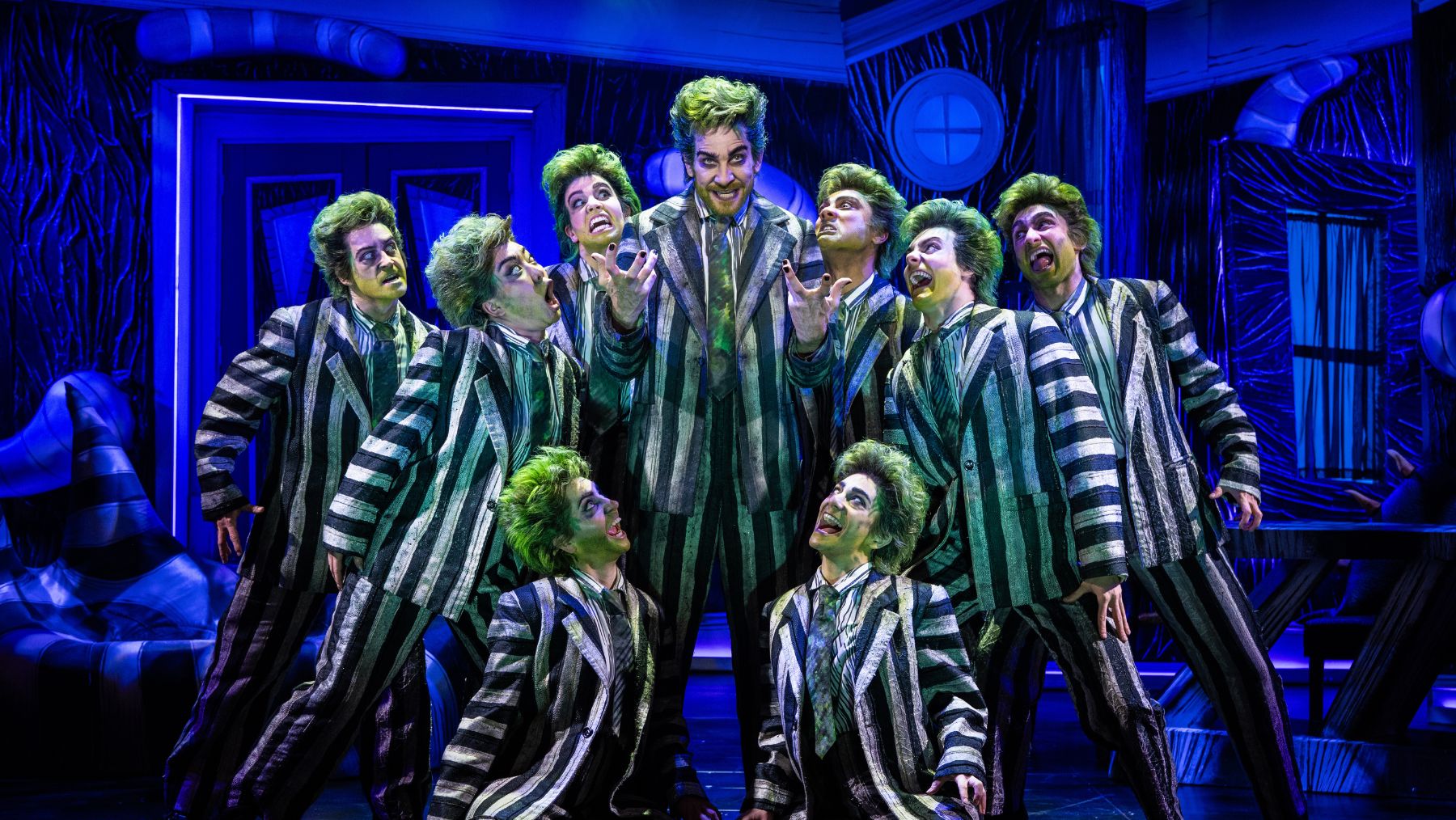
The gathering follows the warning sounded by Sydney Travel Guide after the Australian tour of Beetlejuice The Musical was cut short and its Sydney and Adelaide seasons cancelled. The Michael Cassel Group cited rising touring costs and a cautious consumer environment. Back to the Future: The Musical also closed earlier than expected, while the economics of commercial theatre have increasingly shifted towards shorter runs.
Major shows bring interstate visitors who book flights and hotels, eat in restaurants and spend throughout the city. They also help NSW pursue its goal of $90 billion in annual visitor expenditure by 2035.
On the panel, Cassel said Sydney should stop repeatedly questioning whether it was the nation’s cultural capital and begin confidently claiming the title. That meant premiering productions in the city, strengthening support for performing arts organisations and promoting live performance as central to Sydney’s identity.
Rigby offered the hard economics. Across 24 Australian productions, he said, his shows had grossed about $398 million and generated an estimated $416 million in wider economic benefits. Yet a producer bringing a show with the potential to sell 100,000 or 150,000 tickets often had no established way to plug into city tourism or education campaigns.
“You’re on your own,” he said.
He argued that Sydney should value the steady contribution made by theatre across many venues, rather than waiting for the next global blockbuster.
McMaster said Sydney’s strategy must also stretch west. By 2036, he said, 52 per cent of the city’s population was forecast to live west of Olympic Park, with strong growth in South Asian and Southeast Asian communities. The future required better infrastructure, more agile touring systems and shows that reflected the full diversity of Greater Sydney—not simply another Hamilton.
Tapiki said theatres also had to work harder to reach audiences and remove friction from buying tickets. After Theatre Royal took a stall at a seniors expo, staff repeatedly heard people say they had not known Cats was playing or even that the venue had reopened.
“The show begins way before the house lights go down,” she said.
Graham ended by noting that it was more than a decade since Hamilton premiered on Broadway. Who, he wondered, could have predicted that a musical involving fiscal policy and a financial regulator would become a global phenomenon?
His own proposed follow-up—Tax Offsets: The Musical—may struggle to match it at the box office.