Tony Albert’s new exhibition at the Museum of Contemporary Art, titled Not a Souvenir, explores portrayals of Aboriginal peoples and cultures through the reclamation of kitsch or “daggy” (as guest curator Bruce Johnson McLean called them) souvenirs.
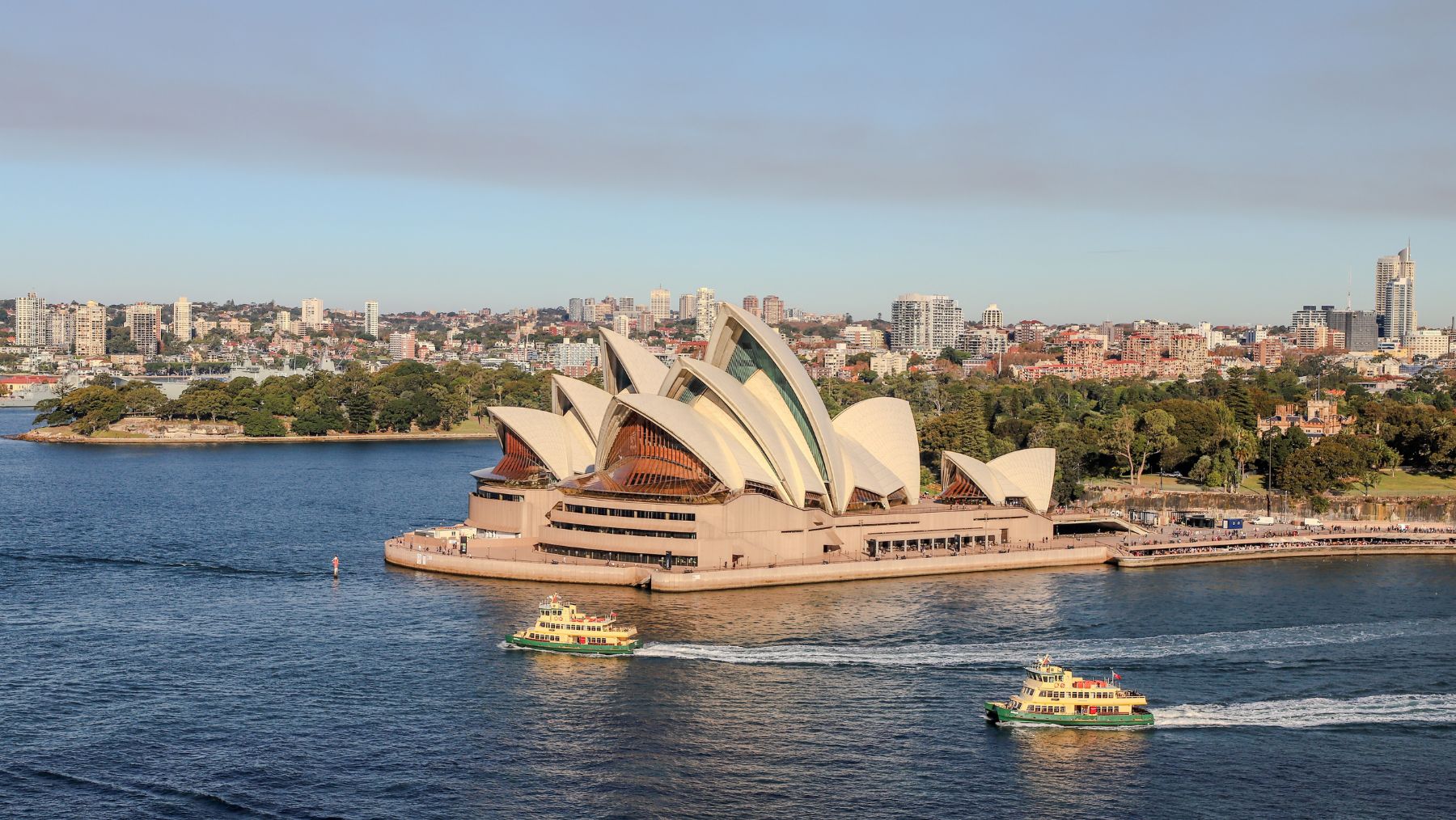
There’s a certain symmetry in reaching Tony Albert: Not a Souvenir via Circular Quay, one of Sydney’s busiest tourist thoroughfares. The exhibition takes inspiration from the location of the MCA at Tallawoladah on Warrane (Sydney Harbour) and the nearby precinct of The Rocks. Not only is it a site of early colonial contact, but it’s also synonymous with international tourism and souvenir culture.
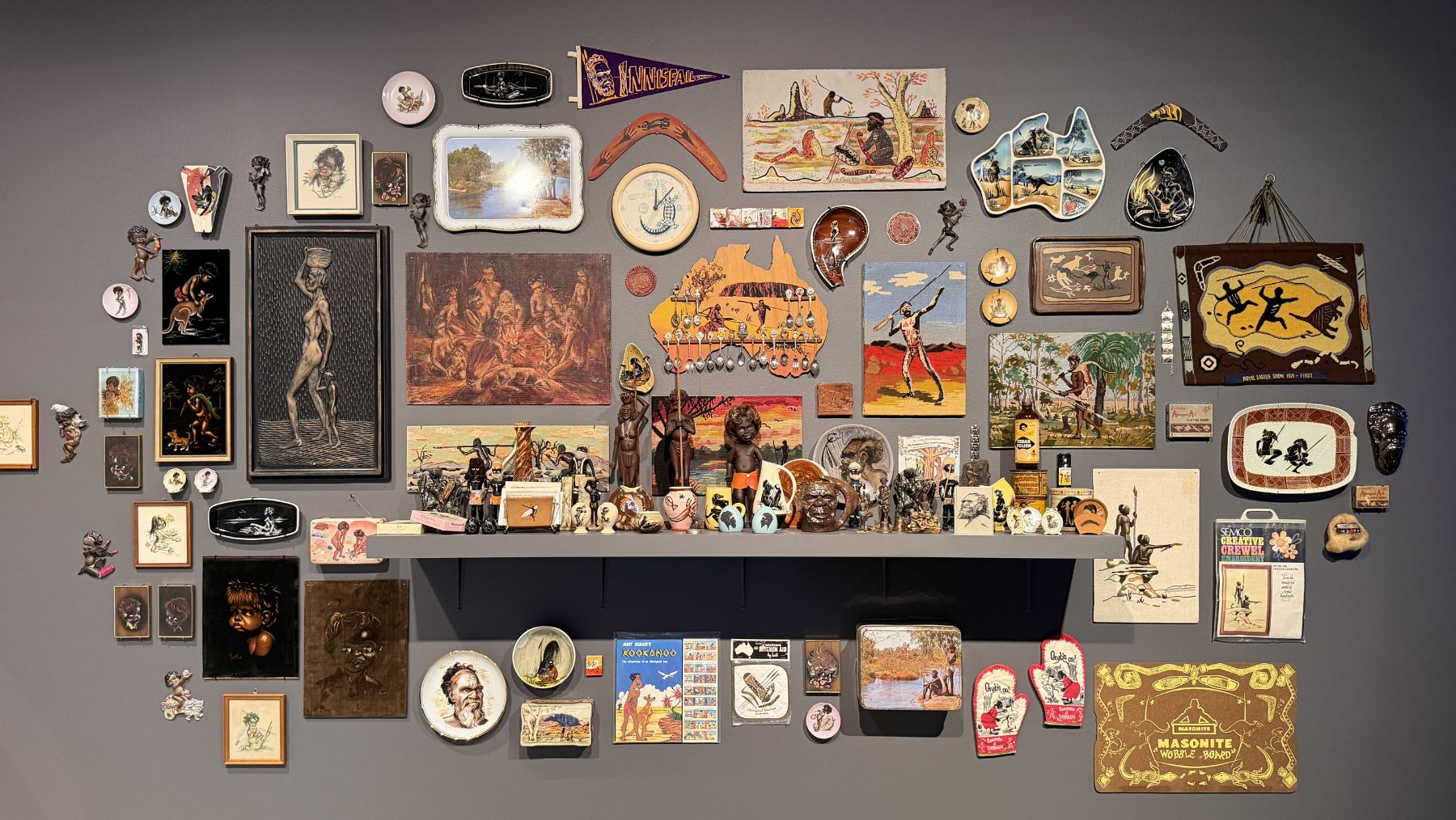
Tony Albert: Not a Souvenir introduces a new word to us (one that the artist himself coined): Aboriginalia. It refers to the mass-produced kitsch featuring stereotypical and often racist depictions of Aboriginal peoples. Albert (Girramay, Kuku Yalanji, Yidindji people) has been amassing a huge collection of these uncomfortable souvenirs since he was a child. For someone who grew up in Brisbane and “lived in op shops” as a child, Aboriginalia was not hard to come by.
Over 2500 objects of Aboriginalia from Albert’s personal collection are featured in his new exhibition. When you first walk into the space, you’ll see hundreds of these souvenirs, curated by Rebecca Ray.
“We never had a conversation about it, we never addressed it”
The first grouping of Aboriginalia remains unaltered, unlike the reworked souvenirs that appear throughout the rest of the exhibition. The decision feels significant, echoing Albert’s own childhood experience of encountering these objects with “great delight”, before growing older and recognising the “ugly side” of them.
Guest curator Bruce Johnson McLean (Wierdi), who has known Albert for more than 25 years, spoke to us about how he navigated this absence of representation as a child:
“You can’t go and get Aboriginal action figures or, you know, Barbies or things like that. So these figures became these kinds of heroic images for Tony as a child, and he developed this real love for them that still is there. But it develops a complexity… as he kind of matures and understands what these objects mean.”
Not A Souvenir brings these issues to light, spotlighting these uncomfortable representations and opening up conversations surrounding souvenir culture. McLean outlines the importance of shining a light on Aboriginalia, telling us,
“This material became daggy, and people began throwing it out, and it ended up at thrift shops. It’s like we realised that this stuff isn’t quite right, so it was just thrown away. That meant that we never had a conversation about it, and we’ve never addressed it. The things in the past often remain unresolved. So, in a way, putting these works on the wall allows us to now have these conversations that we’ve never had.”

Further into the exhibition, you’ll encounter Albert’s 2016 work Mid Century Modern, featuring 70 ashtrays decorated with depictions and representations of Indigenous people, each marked by the remains of stubbed-out cigarettes.
McLean asks us to consider, “What does it mean to put out a cigarette on an Aboriginal person… an actual face, on an Aboriginal body, on an actual part of culture.” He points out that “a lot of people wouldn’t even think twice about it.”
“It’s kind of like this idea of, oh, that’s just the way it was. But that also speaks to these kinds of repressed issues that we still have in this country.”

Albert is clear, however, that his work with Aboriginalia is about cultural pride and survival – a reclaimation.
“It’s about taking these objects and turning them into something that celebrates our survival and our vibrancy as the world’s oldest living culture.”
This is reflected in his works, Blak Velvet. Here, Albert embellishes existing velvet paintings of Aboriginal people with subversive slogans, giving them a new life and creating a fuller picture of Indigenous existence. With text like “Welcome to Country, Exit Through The Gift Shop” emblazoned across the original painting, Albert brings his famous dark humour to the work.

Conversations with Margaret Preston
Albert’s exhibition doesn’t only deal with Aboriginalia, but also reclaims designs and motifs of Aboriginal art that were used by past artists without proper cultural understanding. In the section of his exhibition Conversations with Margaret Preston, Albert is “reclaiming visual imagery that was taken from my culture”.
Drawing on the floral still lifes of Margaret Preston, Albert constructs collages from paint and vintage fabrics. Up close, each work reveals the kitsch Aboriginalia objects that have become familiar throughout the exhibition; step back, however, and the compositions resolve into something strikingly reminiscent of a traditional Preston still life.
These reclaimed works are described as “neither homage nor rejection” and instead serve to “expose a history of appropriation while asserting Indigenous agency and the right to speak back to art history from within it.”

The Aboriginalia Appeal: turn in your offensive souvenirs
The Aboriginal Appeal is a new initiative by Tony Albert and the Museum of Contemporary Art Australia, creating a pathway for people to donate found, inherited or collected Aboriginalia.
For Albert, the initiative is about reclaiming these objects and moving them from a place of pain to a celebration of survival, as he has done in Not a Souvenir. He stated, “If I had my way, I’d love to take the whole lot out of circulation. This isn’t about guilt; it’s about what we do next.”
By donating Aboriginalia to the MCA, these difficult objects can move beyond private collections and become part of a broader process of reflection and reclamation. Rather than remaining hidden, they can help deepen understandings of the past while creating opportunities for Aboriginal communities to reclaim and reinterpret them.
Suzanne Cotter, Director of the MCA, described the initiative as a collective act of truth-telling: “The Appeal is an invitation for all Australians to play an active role in truth-telling – moving these objects from a place of private discomfort into a public space of creativity and cultural vitality.”

How to get involved
During the exhibition period (21 May-19 October 2026) of Not a Souvenir, a dedicated drop-off station will be located in the MCA.
The objects will then be passed on to Albert, who will decide how they are used and transformed.
Donors will be invited to share where the object came from and what their relationship to it is, to form a powerful social archive and a companion narrative to the physical material. This will be done by asking them to email a photograph of the object and write its story when donating.
To book your tickets for Tony Albert: Not a Souvenir, click here.