- Anastasia is the compelling real-life story of how the Russian royal family was murdered by revolutionaries.
- Perhaps not all real life. According to legend, one young girl survived.
- This is her story, told on the musical stage. It’s utterly absorbing with an unexpected ending.
There are few stories in modern history that blur the line between fact and fiction quite like that of Grand Duchess Anastasia Romanov. The brutal execution of the Russian royal family in 1918 at the hands of Bolshevik revolutionaries is one of the most documented tragedies of the 20th century.
Yet, for decades, another narrative persisted, a tantalising possibility that one young princess had somehow escaped.
It is this enduring legend, part history and part “fake news” long before the term existed, that underpins Anastasia, now playing at the Sydney Lyric Theatre. The musical draws on the legend of survival, reinvention and identity, creating a sweeping theatrical experience that is equal parts romance, adventure and historical fantasy.
Spoiler alert: Modern science has since closed the door on the mystery. DNA testing conducted on remains discovered in 1991 and again in 2007 confirmed definitively that Anastasia and all members of the Romanov family were killed in 1918. The truth, it seems, is far less romantic than the legend. But as this production proves, why let facts get in the way of a good story?
And it is a good story.
At its core, Anastasia is not really about whether the princess survived. Instead, it focuses on a pair of opportunistic Russians who attempt to pass off a young woman – any young woman! – as the lost duchess in order to claim a reward from the last surviving Romanov, the Dowager Empress. The narrative cleverly weaves themes of identity, memory and belonging, allowing the audience to suspend disbelief and invest in the emotional journey.
The story has proved remarkably resilient, inspiring everything from the 1956 Ingrid Bergman film to the beloved 1997 animated feature, and eventually this Broadway musical, which premiered in 2017 before making its long-awaited Australian debut.
Stagecraft that elevates the experience
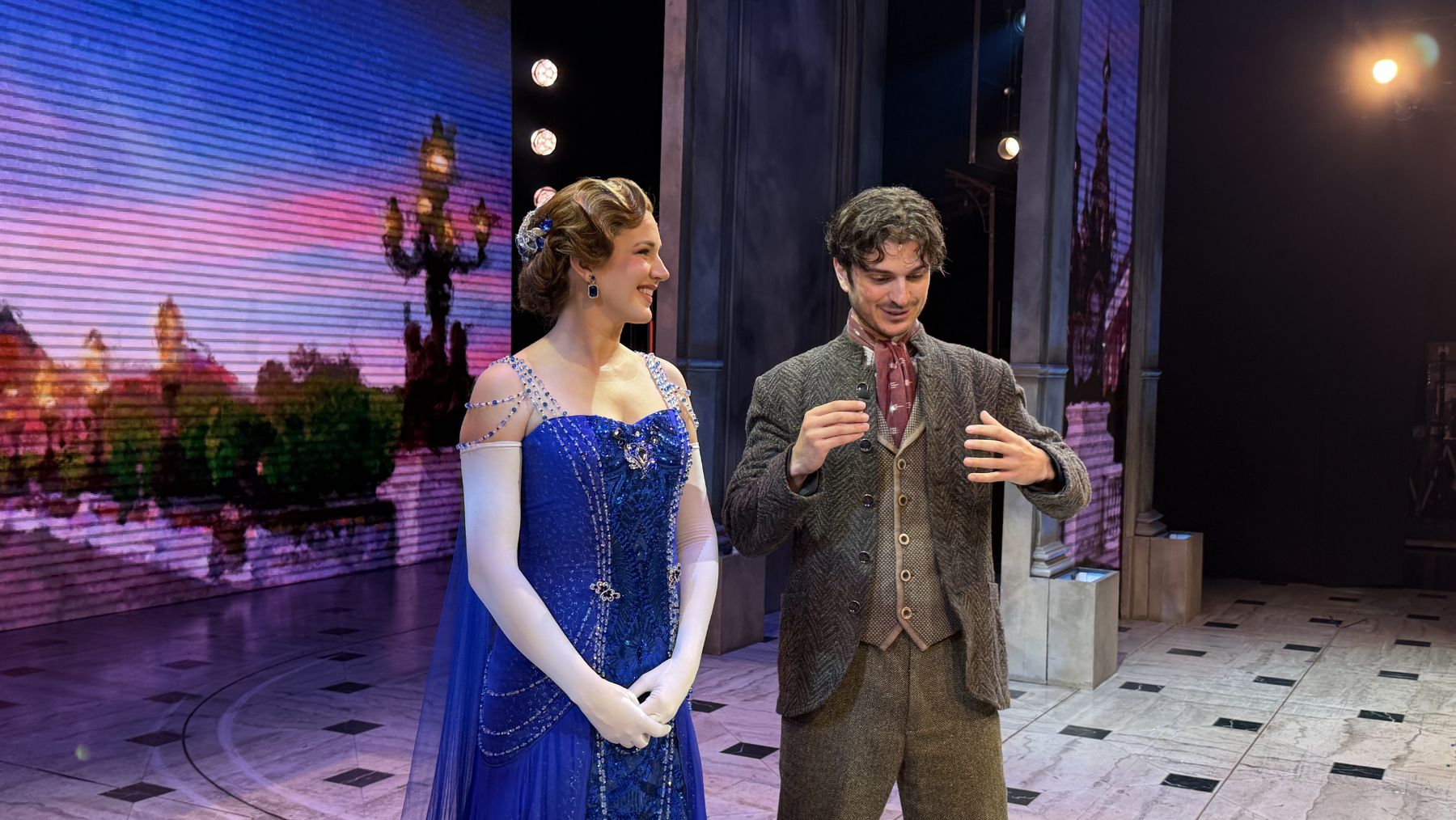
One of the standout elements of this production is its stagecraft. The use of modern video projection to transform the stage at every turn is both clever and highly effective. Rather than relying solely on traditional set changes, the production seamlessly blends digital backdrops with physical scenery, creating a fluid sense of movement across time and place.
From the grandeur of imperial St Petersburg to the vibrancy of Paris, the transitions are smooth and often breathtaking. The projections don’t overwhelm the action; instead, they enhance it, becoming an integral part of the storytelling. It’s a reminder of how far theatre technology has come—and how effectively it can be used when placed in the service of narrative rather than spectacle alone.
In many ways, this visual approach is one of the defining strengths of the show. It keeps the pacing tight, maintains audience engagement, and adds a cinematic quality that suits the sweeping nature of the story.
A cast of theatre royalty
The production also boasts an impressive, all-Australian cast featuring some of the country’s most respected musical theatre performers.
Leading the ensemble is rising star Georgina Hopson in the title role. Her Anastasia is strong, effective and emotionally grounded, bringing both vulnerability and determination to the character. She anchors the show with confidence, particularly in the more intimate moments where the story’s emotional core comes to the fore.
Opposite her is Robert Tripolino as Dmitry, the charming yet conflicted conman who drives much of the plot. His performance is one of the highlights of the production—charismatic and engaging. Dmitry is, after all, the son of a man tied to the Romanovs’ fate, and his struggle to define himself outside of his father’s shadow adds an extra dimension to the narrative.
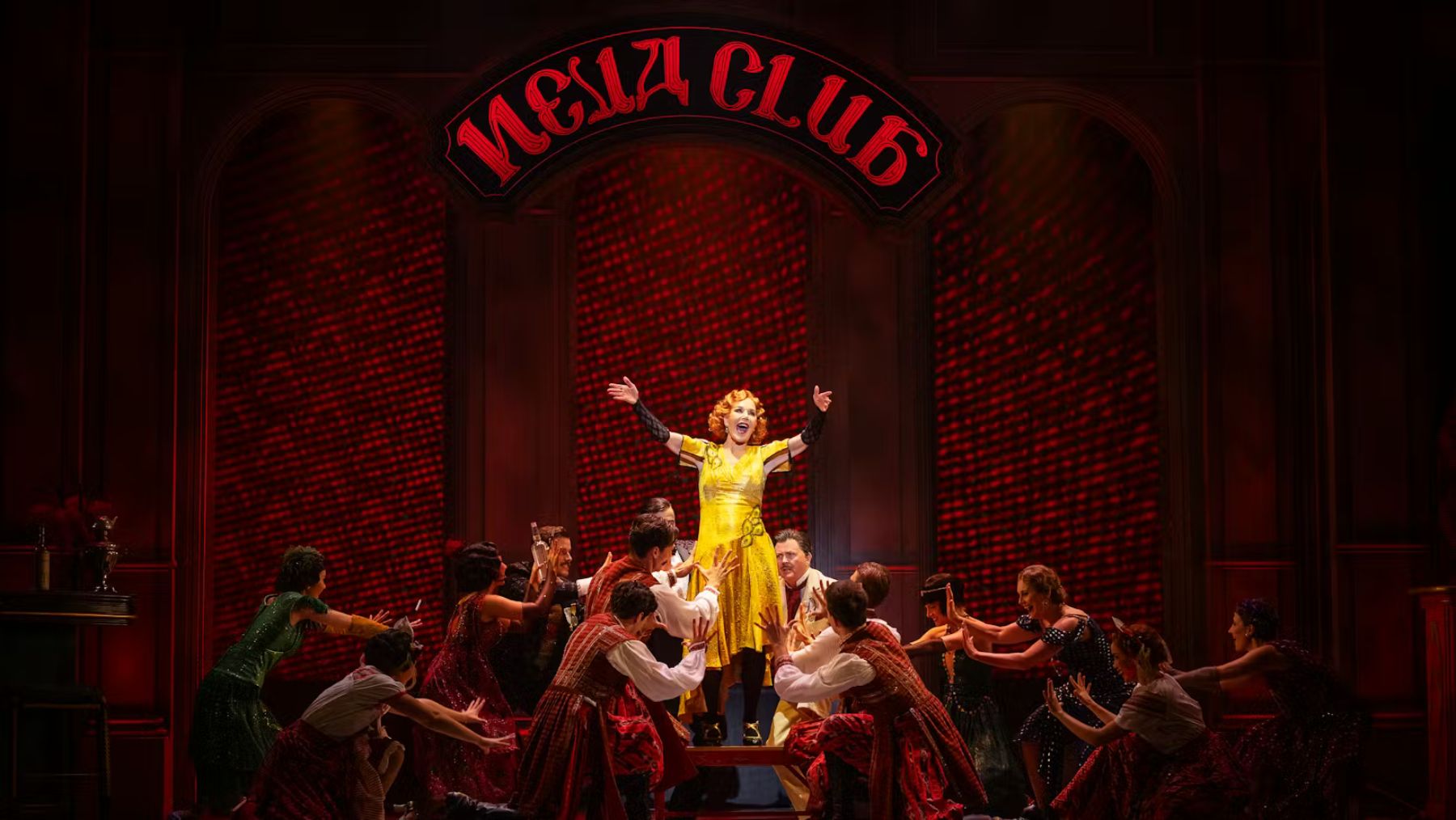
Veterans of the stage, including Rhonda Burchmore and Nancye Hayes, bring undeniable gravitas to the production. Burchmore’s Countess Lily is flamboyant and entertaining, particularly in her show-stopping number Land of Yesterday, which has already drawn praise for its energy and theatricality.
Hayes, as the Dowager Empress, delivers a poised and dignified performance, embodying the quiet strength of a woman who has lost everything yet continues to endure.
Elsewhere, Joshua Robson’s portrayal of Gleb, the antagonist tasked with confronting Anastasia’s past, adds a darker edge to the production. His presence reinforces the tension between truth and illusion that runs throughout the story.
Music that doesn’t quite linger
For a musical of this scale, the score plays a crucial role in shaping the audience’s experience. And while Anastasia features several well-performed numbers delivered with energy and commitment, the music itself is somewhat less memorable.
Songs like Journey to the Past stand out as highlights, showcasing the vocal talents of the cast and providing emotional peaks within the narrative. However, beyond a handful of key moments, the score struggles to leave a lasting impression.
This is not to say the music detracts from the show—it doesn’t. The cast performs each number with gusto, and the songs serve their purpose within the story. But unlike the great musicals where melodies linger long after the curtain falls, Anastasia is unlikely to have audiences humming its tunes on the way home.

A story that still resonates
Despite the historical inaccuracies at its core, Anastasia remains an engaging and emotionally satisfying piece of theatre. Its themes- identity, belonging, reinvention are universal, and the narrative’s blend of romance and mystery continues to captivate audiences.
In many ways, the musical’s greatest strength lies in its ability to make us momentarily believe the impossible. Even knowing the historical truth, we find ourselves drawn into the “what if” of the story. It’s a testament to the enduring power of myth and to the skill of the creatives behind the production that the illusion works as well as it does.
And yes, there is a twist. For those unfamiliar with the story, it provides a satisfying conclusion that ties together the emotional threads of the narrative.
Our verdict
Anastasia at the Sydney Lyric Theatre is, above all, a thoroughly enjoyable night out. It may not redefine the musical theatre landscape, and its score may not be particularly memorable, but it succeeds where it matters most: it entertains.
With impressive stagecraft, a strong central performance, and a story that continues to intrigue more than a century after the events that inspired it, this production offers audiences a chance to escape into a world of history, romance and possibility.
And sometimes, that’s more than enough.
Fact Box
What: Anastasia – The Musical
Where: Sydney Lyric Theatre, Pyrmont, Sydney
When: From April 10 to July 19, 2026
Tickets: Available via Ticketmaster and the Sydney Lyric Theatre website
How to book: Book online through official ticketing partners or theatre box office