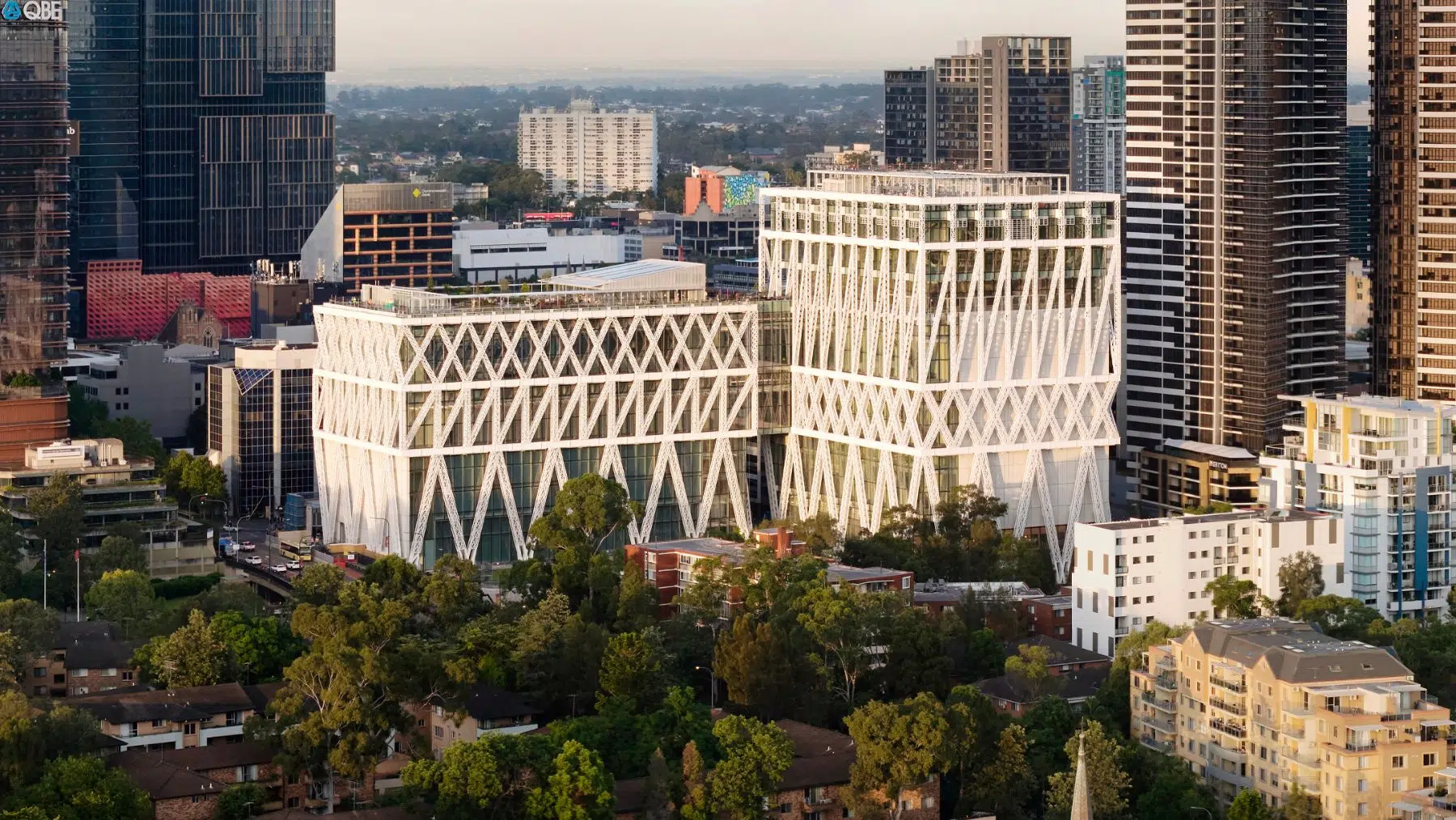
The $915 million Powerhouse Parramatta has officially announced November 7 as its opening date. Here’s everything you need to know about its opening.
Western Sydney’s highly anticipated new museum has announced it will open its doors to the public this November, with five exhibitions set to premiere across its huge 30,000-square-metre space. The new exhibitions will present more than 3000 objects and 120 new acquisitions, featuring over 45 new commissions spanning 14 countries.
Earlier this year, the museum revealed that its leading exhibition will be titled Task Eternal, with Powerhouse labelling it as “one of the world’s most ambitious aerospace exhibitions.” The space-themed headliner will include the historic Qantas Avro 504k aircraft, as well as rovers and rockets displayed across its showpiece gallery.
Powerhouse Parramatta have now pulled back the curtain on the rest of their opening exhibitions, which include The Mall, Overflow, Es Devlin: The Turning and The Dark.
Powerhouse CEO Lisa Havilah said: “Powerhouse Parramatta is a museum built for the future, where local knowledge meets global perspectives. We are thrilled to be opening our doors this November with five world-class exhibitions and a program that is as bold and diverse as the communities it serves.”
Here’s everything we know about the recently announced exhibition, and what you can expect from your first trip to Powerhouse Parramatta.

Shopping malls take centre stage in new exhibition
So, one of the blockbuster new exhibitions to open Sydney’s biggest cultural investment since the Opera House is about… shopping malls?
Powerhouse Parramatta has stated that the second unveiled exhibition, The Mall, will explore “one of the most influential and ubiquitous forms of architecture in modern life.”
Spanning architecture, design, technology, engineering, fashion and popular culture, the exhibition will chart the evolution of the shopping mall, while shining a spotlight on Western Sydney’s “foundational role” in shaping the modern shopping centre.
Although a shopping mall may seem like an unexpected focus for one of the museum’s opening exhibitions, they actually have great relevance to Western Sydney. The first Westfield shopping centre opened in Blacktown in 1959, pioneered by Frank Lowy and John Saunders. There are now more than 80 of the shopping centres around the world.
Unfolding across two storeys, The Mall will comprise five distinct architectural spaces: Arcade, Desire, Transaction, Ideal City and Forum. Tracking the shifting rituals of retail, visitors can see the evolution of our shopping spaces, from a nineteenth-century arcade to AI-driven commercial systems.
Powerhouse Parramatta have revealed the following highlight objects and displays:
- The archive of Austrian-American architect and urban planner Victor Gruen, displayed publicly for the first time.
- Archival material from Australian brands that have shaped local identity and global consumer culture, including Le Specs, Hot Tuna, Mambo, Globe, Crumpler, Above the Clouds and Song for the Mute.
- A large-scale reimagining of a 19th-century Sydney arcade, featuring a series of window displays developed in collaboration with leading brands Breville, David Jones, Oroton, R.M. Williams and Sportsgirl.
- 100 new photographic works documenting the relationship between people and malls in Western Sydney.
- The iconic Levi’s 501 jeans worn by Apple co-founder Steve Jobs and the prototypes of the Predator Boot, conceived by former Liverpool player, Australian Craig Johnston and famously worn by David Beckham.
- A contemporary reimagining of Southwest Sydney’s Roselands Raindrop Fountain by industrial design studio Vert.
- Dr Ryan Presley’s Blood Money, a series of watercolours challenging the predominantly white settler narrative depicted on Australian banknotes and promoting the stories and legacies of important and notable Aboriginal figures.
- An autonomous ballet of warehouse robots by Japanese artist yang02.

Task Eternal: the landmark opening exhibition
Billed as one of the most ambitious exhibitions of its kind, Task Eternal (which was four years in the making) sets out to place Western Sydney firmly in the global conversation. It takes over the museum’s showpiece gallery, an enormous, 18-metre-high, column-free space spanning more than 2,000 square metres, and fills it with scale to match.
Inside, you’ll find more than 600 objects, including major international loans from institutions like the British Museum and the Smithsonian National Air and Space Museum, alongside contributions from space agencies and emerging tech players.
Some of the objects you can expect to see include the historic Qantas Avro 504k aircraft, Australian astronaut Katherine Bennell-Pegg’s spacesuit (on public display for the very first time), a prototype of Roo-ver, a 1914 Bleriot XI monoplane (one of the world’s earliest aircraft) and an F1 rocket engine.
And in terms of commissioned works, expect them to be large, immersive (and yes, infinitely Instagrammable). Pictured above is Vehasayan by Torlap Larpjaroensook: a large kinetic sculpture inspired by Voyager 1 and the Thai greeting that was sent on its Golden Record to space in 1977.
A major part of Task Eternal is the commission Shangri La (Over the Hump) by James Turrell. Turrell brings viewers into shifting fields of light and colour to distort depth perception. This has been described as “flying through dense fog” to connect audiences to Turrell’s background as a pilot.

Walk on water at First Nations-led exhibition
Powerhouse Parramatta will also present Overflow, an exhibition exploring First Nations peoples’ deep relationship with, and custodianship of, saltwater and freshwater systems.
Seven community commissions will come together in Overflow, developed in collaboration with Aboriginal-led organisations across New South Wales. Each work will draw on Aboriginal knowledge and practices of caring for Country, exploring everything from endangered species protection and flood mitigation to sustainable fishing, water monitoring, language revitalisation and cultural water rights.
At the heart of the exhibition will be work by acclaimed filmmaker and Kamilaroi man Ivan Sen, who will bring these stories to life through a cinematic lens.
It’s also been revealed that the exhibition will allow guests to “walk on water”. Powerhouse CEO Lisa Havilah told the ABC that “There will be a huge platform in the middle of the space that will have water in the middle of it.” Designed with Country by Tyrell Studio, Powerhouse Parramatta shared that Overflow provides a “new ground plane, a place to step into water.”

Es Devlin’s immersive commissions
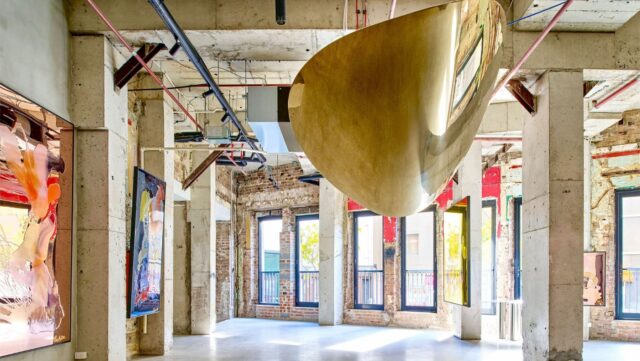
British artist and stage designer Es Devlin has created five major commissions for Powerhouse Parramatta: Forest of Us, Memory Palace, Collective Portrait, Screenshare and Redraw the Edges of Yourself. Together, The Turning marks the acclaimed artist’s first-ever exhibition in Australia.
Designed to be experienced rather than simply viewed, each commission invites audiences to participate, transform and contribute through gathering, drawing and reflection. This is particularly striking in Forest of Us, a labyrinth of mirrors that explores the visual similarities between trees and the human lungs.
The exhibition is also deeply informed by Sydney, drawing on the city’s ecologies, communities and ever-evolving identities.

Conquer your fear of the dark with this exhibition
The final exhibition, The Dark, has been developed for children ages 4-12 to help them see the darkness in a new light and even overcome their fear of it. Rather than something to be feared, the exhibition presents darkness as a space for curiosity, adventure and discovery. As its description puts it:
“The Dark can be wondrous. There’s no need to be scared. It’s for stars and for crystals, for adventure and dreaming. From the depths of the Earth to deep outer-space, The Dark is there for exploring, for meeting the unknown.”
Set inside a meteorite-like installation, the exhibition will feature 100 objects contributed by children across Western Sydney, each accompanied by a story about their encounters with The Dark after responding to a public call-out.
Other pieces confirmed to be on display include an impressive minerals collection, alongside more than 800 objects selected by Powerhouse Parramatta.
How much will entry to the museum be?
During construction, Parramatta Powerhouse kept its cards close to its chest. However, as November approaches, we’re finding out more and more, with John Graham, Minister for Arts, announcing,
“Visitors to the Museum will have great cost of living options as entry to the Museum and most exhibitions will be free”.
It has also been revealed that entry to all exhibitions will be completely free for visitors under 16 years old.
Although the museum has not yet revealed which of its exhibitions will be ticketed (and how much they’ll cost for adults), anyone keen to explore the new space without having to spend money will be welcome to do so. It’s a great result considering that admission costs for cultural spaces across Sydney have been rising year-on-year.
What else do we know about Powerhouse Parramatta?
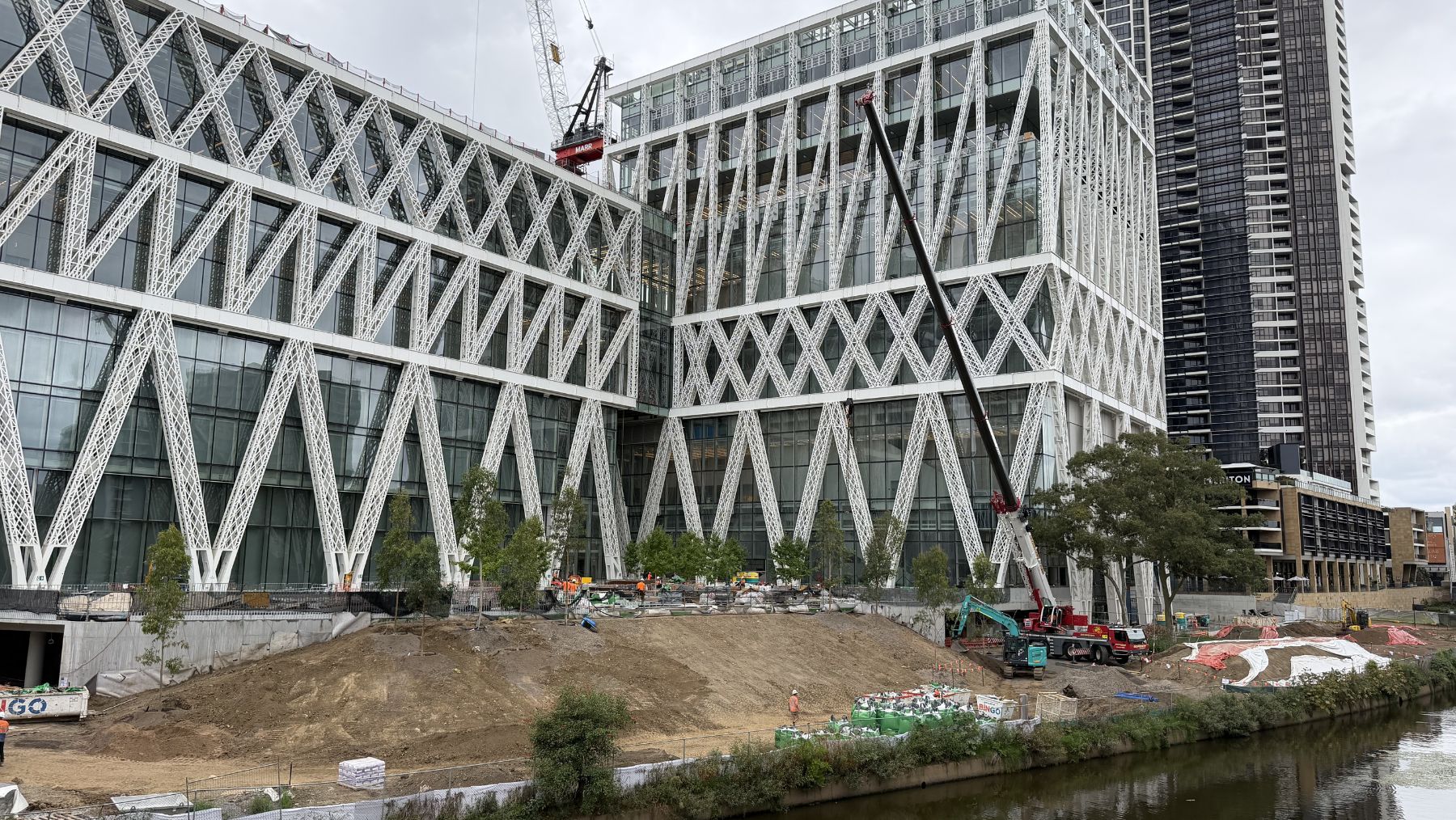
One thing to note about Powerhouse Parramatta is that it’s not just a museum; it’s a full-blown cultural precinct.
More than 50 Australian designers have been commissioned to create everything from furniture and retail spaces to exhibition displays, making the building itself one of the country’s largest showcases of contemporary Australian design.
There’ll be overnight learning residencies, meaning that 10,000 secondary students from across regional New South Wales and Western Sydney will be able to stay at the museum each year.
Alongside accommodation for students, there will also be 30 residential studios, allowing artists, researchers and scientists to collaborate with Powerhouse on research and programs.
For budding chefs and foodies alike, a visit to the 200-seat, large-scale demonstration kitchen will spotlight the science (and culture) of food.
Overlooking the Parramatta River, the Powerhouse restaurant has been designed by acclaimed architect and designer George Livissianis, the creative force behind Redfern’s iconic Greek taverna, Olympus.
Powerhouse Parramatta will showcase histories and cutting-edge thinking about the culture and production of food through two foundational programs: the Vitocco Family Kitchen and the Vitocco Legacy Project.
The Vitocco Family Kitchen will bring together leading chefs and food producers from across Australia and around the world to educate and inspire communities and audiences. It will feature a large-scale demonstration kitchen, seating for audiences of up to 200 people and high-end technology to support digital content creation.
The Vitocco Legacy Project is integrating with and expanding the Powerhouse Australian Culinary Archive, which is working closely with industry to collect the histories of the great chefs and producers of Australia.
Up top, a rooftop terrace delivers skyline views back to the Sydney CBD, alongside a productive garden with Indigenous plant species, an observatory, greenhouse and public event spaces. Master blacksmith and founder of Eveleigh Works, Matt Mewburn, will create a custom-built, multipurpose fire cooking area for the terrace.
Powerhouse Chief Executive Lisa Havilah said, “Powerhouse Parramatta is a new generation museum… It will be a museum embedded with innate flexibility, with the ability to continuously evolve, changing with the world to ensure that it remains relevant and impactful for generations to come.”
You can learn more about the new museum here.