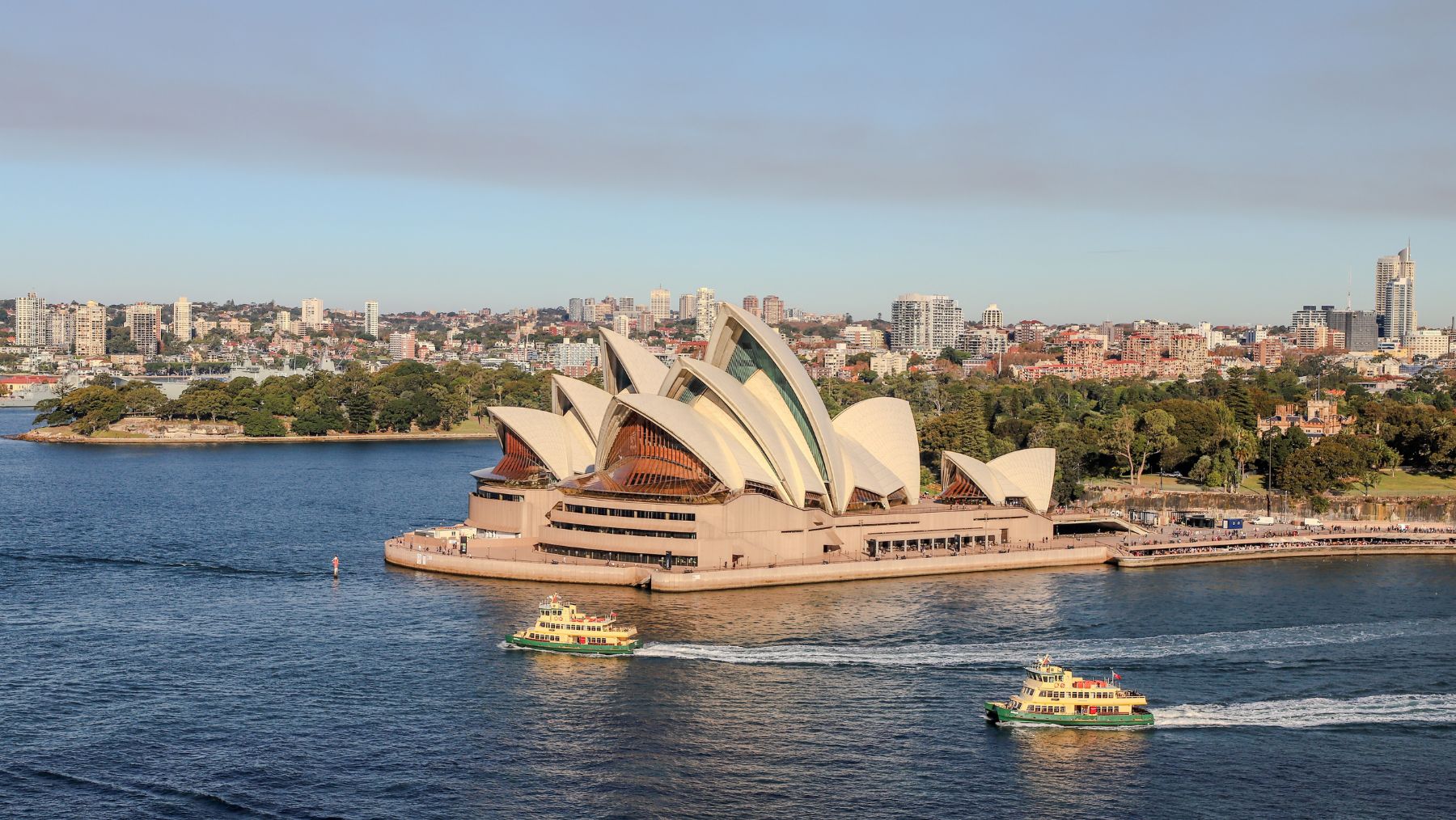
Seventy years after My Fair Lady opened on Broadway, a question hangs over its return to the Sydney Opera House: can a musical built around the shame of sounding Cockney still speak to us?
It was born in a world where an accent could announce your place in society. Eliza Doolittle, a flower seller with wit and ambition, wants lessons from Professor Henry Higgins because speaking differently might get her a job in a flower shop. Higgins sees a more entertaining prospect: he bets he can teach her to pass as a duchess.
That bargain is the heart of My Fair Lady. Long before the Beckhams helped make working-class British voices fashionable, Eliza understood that how she sounded could decide which doors opened and which remained closed.
Celebrity has since made some accents desirable, and success can change the way people speak. But Eliza has no fame or fortune to protect her. She must learn the language of the people with power simply to earn a better living.
George Bernard Shaw’s Pygmalion, on which the musical is based, was written more than a century ago. Alan Jay Lerner and Frederick Loewe turned it into a Broadway hit in 1956, with Julie Andrews originating the role of Eliza. Their songs made the story joyous, but they did not erase its uneasy question: who gets to decide that one way of speaking is better than another?
The question still matters. An accent can still influence a job interview. Education, connections and confidence still make some rooms easier to enter. Higgins can teach Eliza the rules of his world; she must do the hard work of living by them. When she succeeds, what has she won, and what has it cost her?

Opera Australia’s lavish new staging allows those questions to surface without asking the audience to give up the pleasure of the show. Directed by Karen Johnson Mortimer, it recreates the 2016 Australian production directed by Andrews. Andrews has also publicly welcomed Claire Lyon to the role she made famous. It is a production with her blessing and a deep affection for the musical’s theatrical heritage.
From the moment we entered the Joan Sutherland Theatre on opening night, there is a buzz in the room. The audience seems ready to be carried somewhere else, and the production obliges.
Oliver Smith’s sets, preserved under Rosaria Sinisi’s scenic supervision, give the evening its grand scale. Cecil Beaton’s costume designs, recreated by John David Ridge, are a pleasure in their own right. Higgins even lights a real cigar on stage. The detail makes the Edwardian world feel wonderfully present.
But spectacle alone cannot sustain a three-hour musical. It needs an Eliza who can be funny, furious, vulnerable and commanding. Lyon is all four. Her flower seller has energy from the start; as Eliza learns to move through Higgins’s world, Lyon lets us see the person beneath the performance. The transformation is impressive precisely because we never lose sight of the woman doing the transforming.
Her “I Could Have Danced All Night” was the evening’s unforgettable moment. The sound was beautiful, but it was the feeling behind it that gave me goosebumps. Around me, the audience seemed to hold its breath with her.

Nathaniel Parker brings wit, arrogance and eccentricity to Higgins in his first musical performance. He has the presence to make this formidable professor believable, and his exchanges with Lyon give the story its spark. Higgins is often infuriating, as he should be. The production invites us to enjoy his cleverness while seeing the damage his carelessness does to Eliza.
Reg Livermore is one of the great joys of the night as her father, Alfred P. Doolittle. At 87, the Australian theatre legend remains a consummate showman. He sings, dances and lands his humour with a warmth and energy that put the audience in the palm of his hand. His performance is a reminder that My Fair Lady has room for more than one sharp view of class: Alfred has his own ideas about what respectable society expects of him.
Robyn Nevin makes every line count as Mrs Higgins. Elegant, perceptive and wonderfully funny, she needs little time on stage to show how clearly she understands both her son and Eliza. The ensemble moves with precision and infectious energy, while the Opera Australia Orchestra gives Lerner and Loewe’s familiar score richness and life. Songs we think we know by heart feel fresh when played and sung with this much commitment.
Can My Fair Lady endure? After this performance, the answer is yes. Its treatment of Higgins and Eliza’s relationship may still leave an audience arguing on the way home, and that is part of its appeal. Eliza’s greatest achievement is not that she learns to sound like a duchess. It is that, having done everything Higgins demanded, she insists on being treated as a person rather than a project.
By the final curtain, the audience was on its feet. This My Fair Lady is elegant, funny and gloriously performed. It sends us home humming, but also thinking about whose voices society chooses to hear. Seventy years on, that makes it more than a beautiful night at the theatre.
What: My Fair Lady, presented by Opera Australia and John Frost for Crossroads Live
Where: Joan Sutherland Theatre, Sydney Opera House, Bennelong Point
When: Until 31 October 2026; approximately three hours, including interval
Tickets: From $89, plus a $9.80 booking fee, through Opera Australia. Prices and availability vary by performance.