One thing I love about a museum, especially one hinged on history, is that feeling you get when you exit back into the city and see it through fresh eyes. I felt it recently after exiting Hyde Park Barracks for the first time in a long time, walking out onto Macquarie Street and turning back to face the heritage architecture to just let my imagination run wild.
Hyde Park Barracks is my favourite of Sydney Living Museums, a collective of spaces that retrace Sydney’s history in historic spaces, like Hyde Park Barracks, and like gorgeous time capsules such as Museum of Sydney (which sits on the site of the original Governor’s House), Elizabeth Bay House and The Mint.
Then we have those more traditional ones: cutting-edge art institutions with enormous special exhibitions, fascinating permanent collections, and a collective desire to platform Sydney’s artistic and historical value beyond its stunning natural beauty and rich cultural calendar.
The following are my top picks of Sydney’s many major museums and galleries. They’re laces I return to when I need perspective, grounding, or simply a reminder of how layered this city really is. Some inspire awe. Others surprise quietly. A few feel essential in understanding Sydney beyond its beaches and postcards. These are the institutions that matter most to me, based on years spent wandering their permanent collections, returning again and again, watching how they shape the city around them.

1. Art Gallery of NSW
Let’s start with the most obvious. In 1871, three decades before Australia was even federated, a group of around 30 art enthusiasts started the NSW Academy of Art in Sydney to promote fine arts through exhibitions, lectures and classes. Nine years later, in 1880, the collective moved to The Domain and took over the Garden Palace annexe that was left behind from the 1879 Sydney International Exhibition, but it wasn’t until around 1896 that the current location was established. The purpose-built sandstone building finished its main hall in 1909.
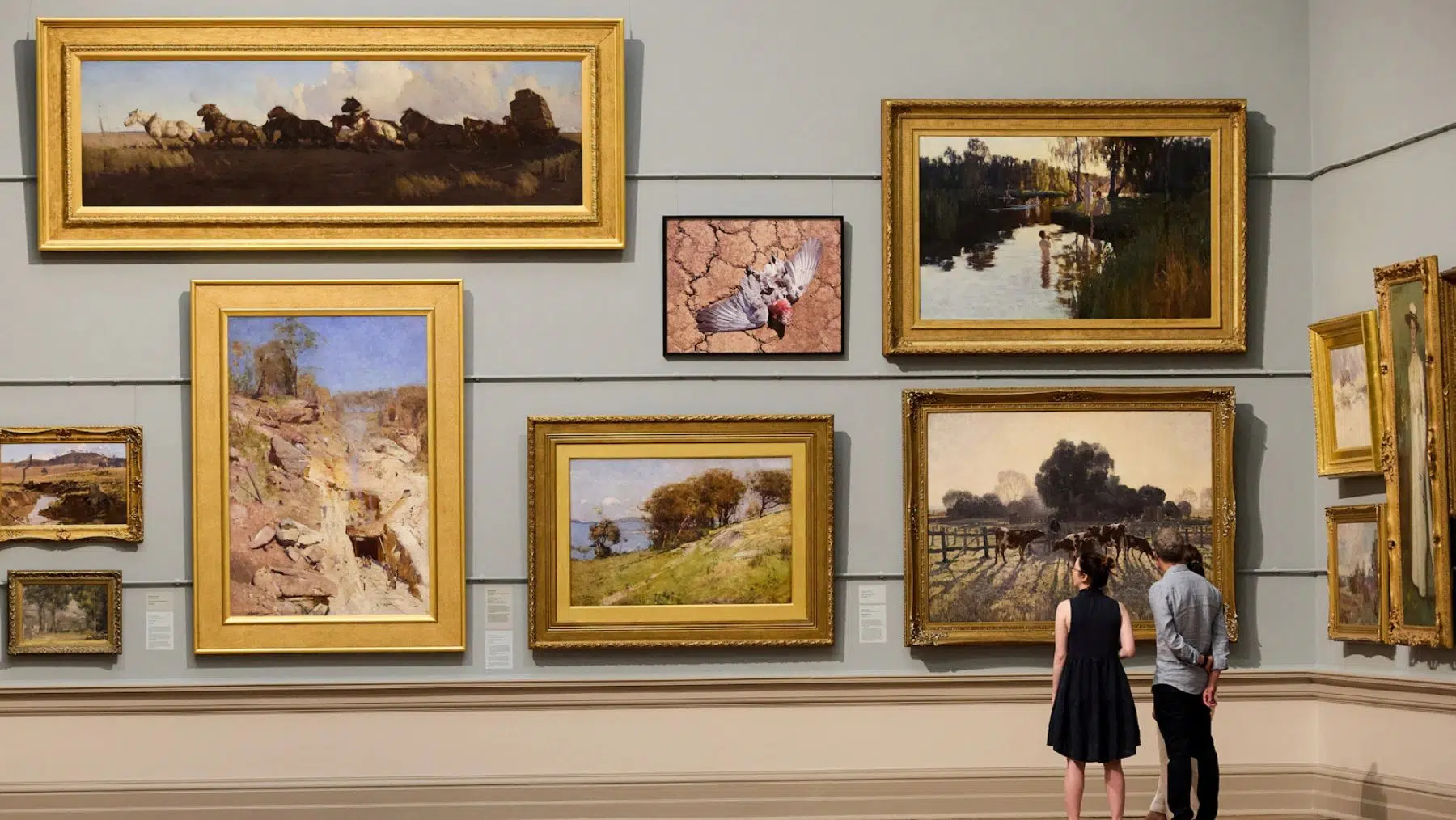
Like most born-and-bred Sydneysiders, I have fond memories of discovering The Archibald Prize (mid-May to mid-August) each year and watching as controversy reliably followed. I’ve been through to see major retrospectives for the likes of Brett Whiteley and shows from Yayoi Kusama and Kandinsky. And like most, the institution helped me gain a better understanding and appreciation for Aboriginal and Torres Straight Islander art, especially once the newer Naala Badu opened in 2022.
I feel immense pride every time I enter the Art Gallery of NSW now. I’ve visited some of the most reputable major galleries around the world, including the Louisiana Museum of Modern Art in Denmark and the Art Institute of Chicago in the USA. I’d put AGNSW on that level, and while it may lack as many worldly masterpieces, the meaningful curation, Naala Badu’s modern, light-filled galleries, and a constant desire to experiment
The permanent collection galleries are sprawling and worth revisiting regularly, given how dynamic the full collection is. Famous works by Sidney Nolan, Grace Cossington Smith, John Glover, Margaret Preston, Fred Williams and Brett Whiteley are always great to see in the flesh, and there’s a good scope for various mediums, including prints, drawings and watercolour paintings.
Try to go on a weekday towards the end of the day, as that’s typically the least busiest time. And you’ll want to see AGNSW when it’s not teeming with locals and visitors, so try to time your visit towards the final few weeks of any special exhibitions (as most locals would have been through already by that point).
It really is the best art gallery in Sydney, so it deserves to be experienced properly.
Address: Art Gallery Rd, Sydney NSW 2000
Contact: 1800 679 278
Price: The permanent collection is free to view for both locals and visitors.
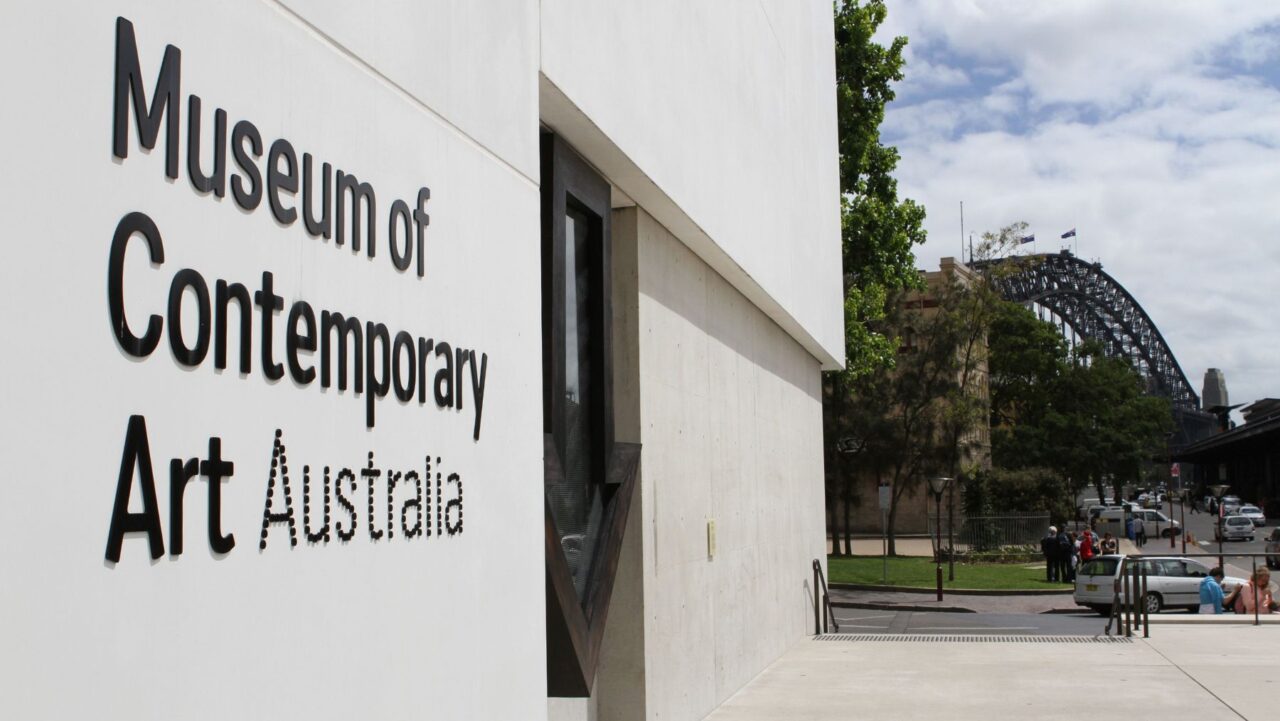
2. Museum of Contemporary Art
I always feel like I am standing at a crossroads at the MCA. There are few places in Sydney where the city feels so… of the moment. The museum sits right on Circular Quay, wedged between ferry wakes, tour groups and one of the most photographed stretches of harbour in the world. It is impossible to forget where you are.
The MCA’s permanent collection focuses on Australian contemporary art across painting, sculpture, photography, video and installation, with a particularly strong emphasis on Aboriginal and Torres Strait Islander artists. That balance is what keeps me coming back. The work often looks forward while constantly examining where contemporary practice came from and who it has historically excluded. Not everything lands, and I like that.
Don’t feel like you’re obliged to get a ticket to one of the special exhibitions if the brief doesn’t land for you. I feel like the MCA’s curation has gotten more experimental and broader over the years, asking many different questions about the future of the arts industry. Constantly engaging in discussions around art (and, increasingly, identity) can be exhausting and poignant. If you’re not in the mood for that, stick to the permanent collection, which sits mainly across the first three levels.
Location is a huge part of the experience. Being steps from the Overseas Passenger Terminal means the MCA is often one of the first cultural institutions visitors encounter when arriving by cruise ship. I almost always head upstairs at the end of a visit. The rooftop terrace offers one of the most expansive views of Sydney Harbour, and it is the perfect place to pause after taking in the collection below. Ferries cut across the water, the Opera House glows nearby; there aren’t many museums that come with a view like that.
Address: 140 George St, The Rocks NSW 2000
Contact: (02) 9245 2400
Price: $20 for general admission

3. White Rabbit Gallery
White Rabbit is one of the most intense gallery experiences in Sydney, and I never leave it feeling neutral. Tucked away in Chippendale, White Rabbit Gallery’s exhibitions are always cutting-edge and provocative. Judith Neilsen and her team have always been top-shelf curators. This is a permanent collection of contemporary Chinese art, built around works that grapple with power, politics, identity, consumerism and control.
I find the experience immersive and occasionally confronting. Painting, sculpture, installation and video are presented densely and so there’s a lot to see, often without much breathing room. Some works are unsettling. Others are darkly humorous. All of them feel like they’ve earned their place in the gallery.
White Rabbit changed Sydney by forcing a broader cultural conversation about Asia that went well beyond food and design. It positioned contemporary Chinese art as an indelible aspect of Sydney’s artistic scene and, along with the 4A Centre for Contemporary Asian Art in Haymarket, has a long history of platforming lesser-known and visionary Asian voices. The permanent collection includes major works by artists such as Ai Weiwei, Cai Guo-Qiang, Zhang Xiaogang and Sun Yuan & Peng Yu, with painting, installation and video art grappling with power, memory and modern Chinese identity.
I like that it resists casual consumption. You need to move slowly here. Take breaks. Sit with the work. White Rabbit rewards commitment, and no one visits just once. That is exactly why it remains one of Sydney’s most important galleries.
Address: 30 Balfour St, Chippendale NSW 2008
Contact: (02) 8399 2867
Price: Free entry to the permanent collection

4. Brett Whiteley Studio
I feel like more cities need a space like Brett Whiteley Studio. It’s that kind of “hidden gem” most visitors desperately search for, but it often flies under the radar amongst bigger museums and galleries.
This is one of the most intimate museum experiences in Sydney, and it never feels staged. Set inside Brett Whiteley’s former Surry Hills studio, the space preserves the artist’s working environment almost exactly as he left it. Paint-splattered floors, unfinished canvases, reference photographs, tools and personal ephemera all remain in place. You are not looking at a retrospective so much as stepping into a mind mid-process, which has a much more cerebral effect than a traditional gallery.
I always find the experience emotional, given how surreal his works are. Whiteley’s paintings, drawings and sculptures are displayed alongside the clutter of daily life, which strips away any grand mythology. Creativity here feels obsessive, ongoing and human. The studio adds something essential to Sydney’s cultural ecosystem by showing that one of Australia’s most celebrated artists worked not in pristine conditions. That lack of polish is necessary for art lovers who really want to explore creativity. It deepens your understanding of Whiteley’s work and, more broadly, how art actually gets made.
Address: 2 Raper St, Surry Hills NSW 2010
Contact: (02) 9225 1744
Price: Free entry to the permanent collection
artgallery.nsw.gov.au/brett-whiteley-studio
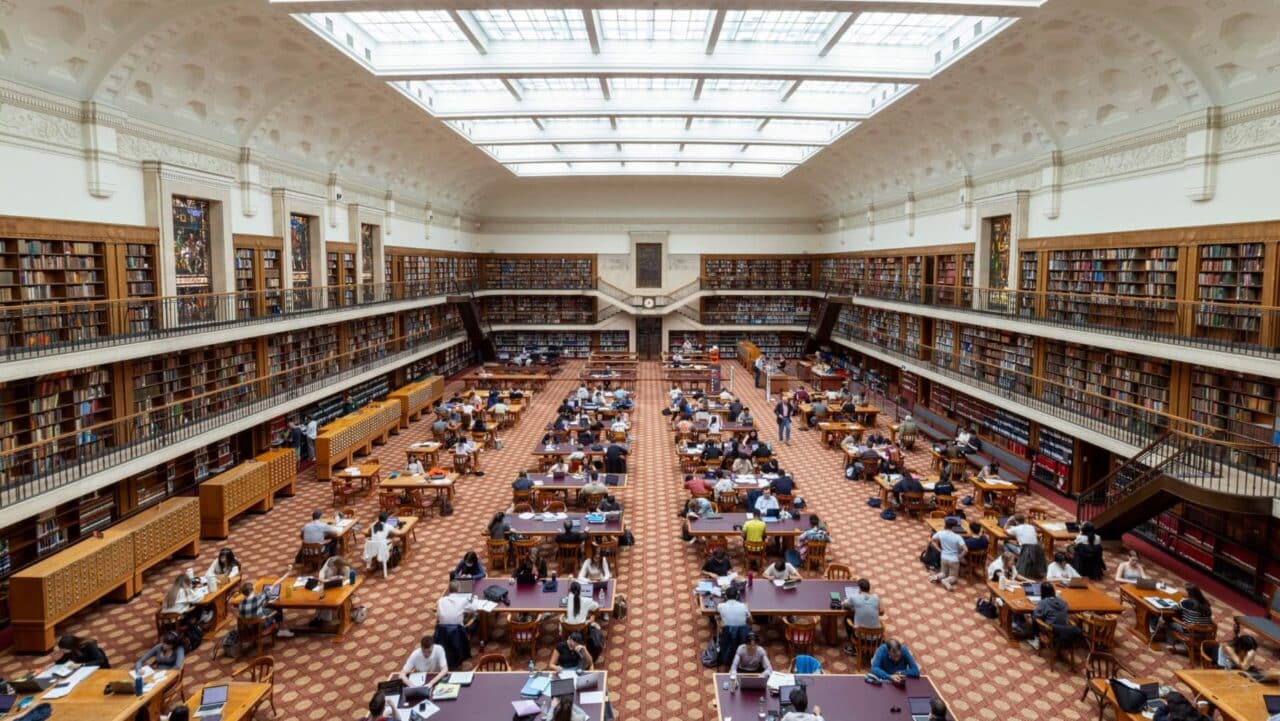
5. State Library of New South Wales
Our beautiful sandstone State Library of NSW is an underrated way to truly understand and examine how Sydney came to be. Like most locals, I never really paid attention to or appreciated this until a few years ago, when I was researching the history of the 1800s in Australia.
Yes, the Mitchell Library Reading Room is still one of the most quietly impressive interior spaces in the city, but search harder and you’ll find early colonial documents and Indigenous records that go beyond museum placards and quick video packages. Reading through them is teasing the imagination, while also gaining a deep understanding and appreciation of how complicated and violent Sydney’s origin story is.
The permanent collections are vast and deeply grounding. Manuscripts, maps, photographs and personal papers trace the formation of New South Wales from first contact through to the modern city. The library does not try to simplify history. It preserves nuance, contradiction and context, which feels increasingly rare. I always leave feeling calmer, more informed, and more connected to the city around me.
Address: Macquarie St, Sydney NSW 2000
Contact: (02) 9273 1414
Price: Free entry

6. Museum of Sydney
The Museum of Sydney feels like it should be bigger and more pronounced, but its off-hand location matters a great deal. Built on the site of Australia’s first Government House, it asks you to pay attention before it asks you to respond.
The permanent galleries focus on the layered histories of Sydney, with particular emphasis on Indigenous voices, early colonial life and the city’s ongoing transformation. Objects, documents and audio accounts are used sparingly but effectively. Nothing feels overexplained, and video installations are long, pointed and factual.
The museum starts with a long line of replicas detailing every ship in the First Fleet, which arrived in Port Jackson in 1788, then flows freely into various stories piecing together the history of governance and displacement in Sydney. There are stories within these walls that even most locals have never heard, so I encourage any visitor to sit down and watch the long, informative TV program in one of the side galleries. This is also where my favourite paintings in Sydney are, depicting the arrival of the First Fleet from an Indigenous perspective.
Make sure to check out the theatre while you’re there. Two video packages play on loop, showing archival footage of historic moments like the construction of the Sydney Harbour Bridge. This is footage I’ve never seen elsewhere, so it’s exclusive to the museum.
Its location at Circular Quay sharpens the experience. Step outside and you are surrounded by ferries, tourists and postcard views. Step back inside and the city’s foundations feel far less comfortable. That contrast is what makes the experience.
Address: Cnr Bridge St & Phillip St, Sydney NSW 2000
Contact: (02) 9251 5988
Price: Free entry
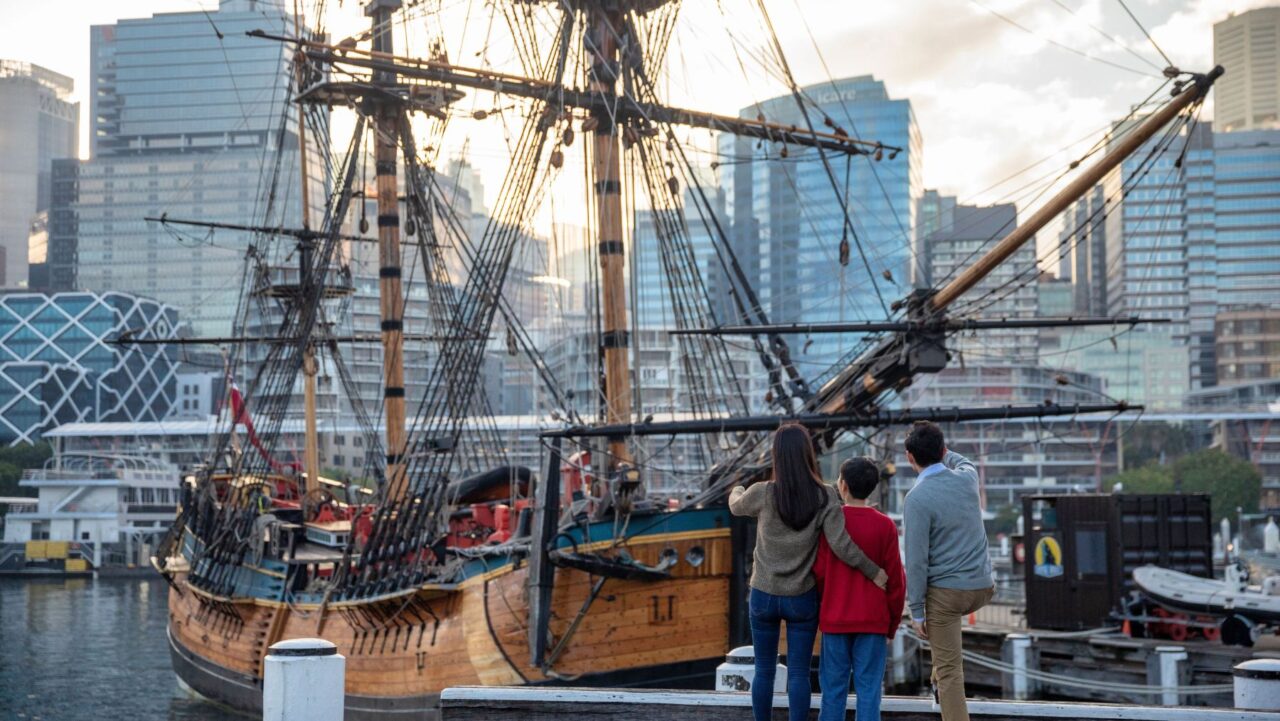
7. Australian National Maritime Museum
You can’t separate the story of Sydney from the water; it’s just not possible. And so the Australian National Maritime Museum is another essential piece of putting the city’s history together. Sitting on Darling Harbour, it feels appropriately exposed. Bright, open – in constant conversation with the harbour itself. You are never allowed to forget that this city exists because of the sea, not just beside it.
The permanent galleries trace Australia’s deep maritime history, from Indigenous seafaring knowledge and navigation through to naval defence, migration and commercial trade. I like how tactile the experience is. You move between objects, vessels and stories rather than reading history at arm’s length. The emphasis on movement and journey makes the narratives feel lived rather than archival. It also broadens the idea of maritime history beyond war and exploration to include everyday lives shaped by water.
What the museum adds to Sydney’s cultural fabric is perspective. It reframes the harbour as a working space rather than a backdrop. Standing on the waterfront, watching ferries cut across the water after moving through the galleries, the connection clicks. The city suddenly makes more sense. I always leave with a clearer understanding of how migration, trade and geography shaped Sydney into what it is today.
Plus, you can actually board tall ships and navy ships, and even enter a submarine. There aren’t museums in the world where you can walk around historic vessels that have been so well preserved, sitting in our harbour for decades.
Address: 2 Murray St, Darling Harbour NSW 2000
Contact: (02) 9298 3777
Price: Free entry to the permanent galleries

8. Australian Museum
The Australian Museum is where Sydney zooms out. Way out. I come here when I want to be reminded that the city is a very recent layer in a much older story. Sitting at the top of College Street, this is a larger museum than you think, and has plenty of capacity of both rotating exhibitions (they’ve been loving VR lately) and permanent collections.
The permanent collection spans natural history, anthropology and Indigenous cultures, grounding Australia within deep time. Dinosaurs, minerals, mammals and insects sit alongside extensive collections exploring Aboriginal and Torres Strait Islander histories and knowledge systems. I like how the museum connects science and culture rather than separating them. You move from ancient fossils to living cultures without a hard line between the two. It reframes Australia not as isolated, but as interconnected with global ecosystems and human histories.
Although it’s not entirely a natural history museum, there’s plenty of exploration of the living world. But there’s also deep reverence for culture and identity, not only centred around First Nations but often reaching into other parts of the world and slotting Australia in as the anchor.
What has helped keep the Australian Museum relevant is its willingness to loosen up occasionally. Over the years, I have dipped into after-dark events like Jurassic Lounge, which transform the building into something playful and social. Different themes, music drifting through galleries, a glass of wine in hand. They are not as common as they once were, but they remain a clever reminder that learning can be fun at any age.
Address: 1 William St, Sydney NSW 2010
Contact: (02) 9320 6000
Price: Free entry to the permanent collection

9. Hyde Park Barracks
Hyde Park Barracks is one of the most emotionally resonant sites in Sydney, and it’s like that from the moment you step inside. There is no easing in. The building does the work for you. Georgian brick, narrow staircases, low light. No other museum in Sydney centres a sense of place as well as this former convict barracks and asylum on the edge of Hyde Park.
The permanent exhibitions centre on convict lives, institutional control and survival. The stories are not abstract. They are physical and confronting. Dried rat carcasses sit alongside records of overcrowding, punishment and illness. Personal accounts detail hunger, filth and exhaustion. Nothing is softened or romanticised, which is exactly what I like.
The geo-tagging audio guide deepens the experience, even if it can be a little overzealous at times, triggering narration when you pause unexpectedly. Still, it works. Voices emerge as you move through spaces where people once slept, worked and suffered. The sound effects can be quite graphic as well (trigger warning: sounds of vomiting and general sickness).
This is not an easy museum to like, but it is a necessary one. Hyde Park Barracks adds moral weight to Sydney’s cultural landscape. I always leave more reflective when I exit that big, historic, UNESCO heritage-listed building.
Address: Queens Square, Macquarie St, Sydney NSW 2000
Contact: (02) 8239 2211
Price: Free entry