The 25th Biennale of Sydney runs from Saturday, March 14 to Thursday, June 14, once again filling the harbour city with cutting-edge art installations across five major exhibition sites, including the historic White Bay Power Station and the Chau Chak Wing Museum at the University of Sydney.
The power of contemporary art to dig into untold stories, inspire audiences and enliven sites around the inner city and beyond, will be threaded by the theme of Rememory and handled by artistic curator Hoor Al Qasimi, the first Arab to be appointed to the role in the festival’s 53-year history.
More than 80 artists from 37 countries are now telling their stories across Sydney, interpreting the flexible theme, which was inspired by Toni Morrison’s novel Beloved, in their own personal way. How do we look at the past problems, recalibrate memories and envision better futures?
This open brief has led to some extraordinarily profound and fascinating works that are on display over the next few months. The Biennale of Sydney is always a lot to get through, so we’ve put together a guide for Sydney Travel Guide readers to help you all navigate this ambitious program.
Use the official website to start planning now: biennaleofsydney.art.
What is Rememory?
The 25th Biennale of Sydney is officially titled Rememory, curated to highlight the interplay between memory and history.
The official Biennale of Sydney website states that Rememory is “a means of revisiting, reconstructing, and reclaiming histories that have been erased or repressed…[signifying] the intersection of memory and history, where recollection becomes an act or ressembling fragments of the past – whether personal, familial, or collective.”
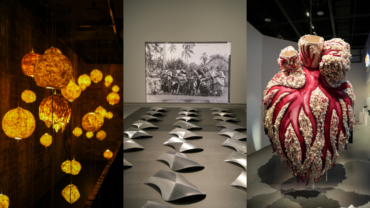
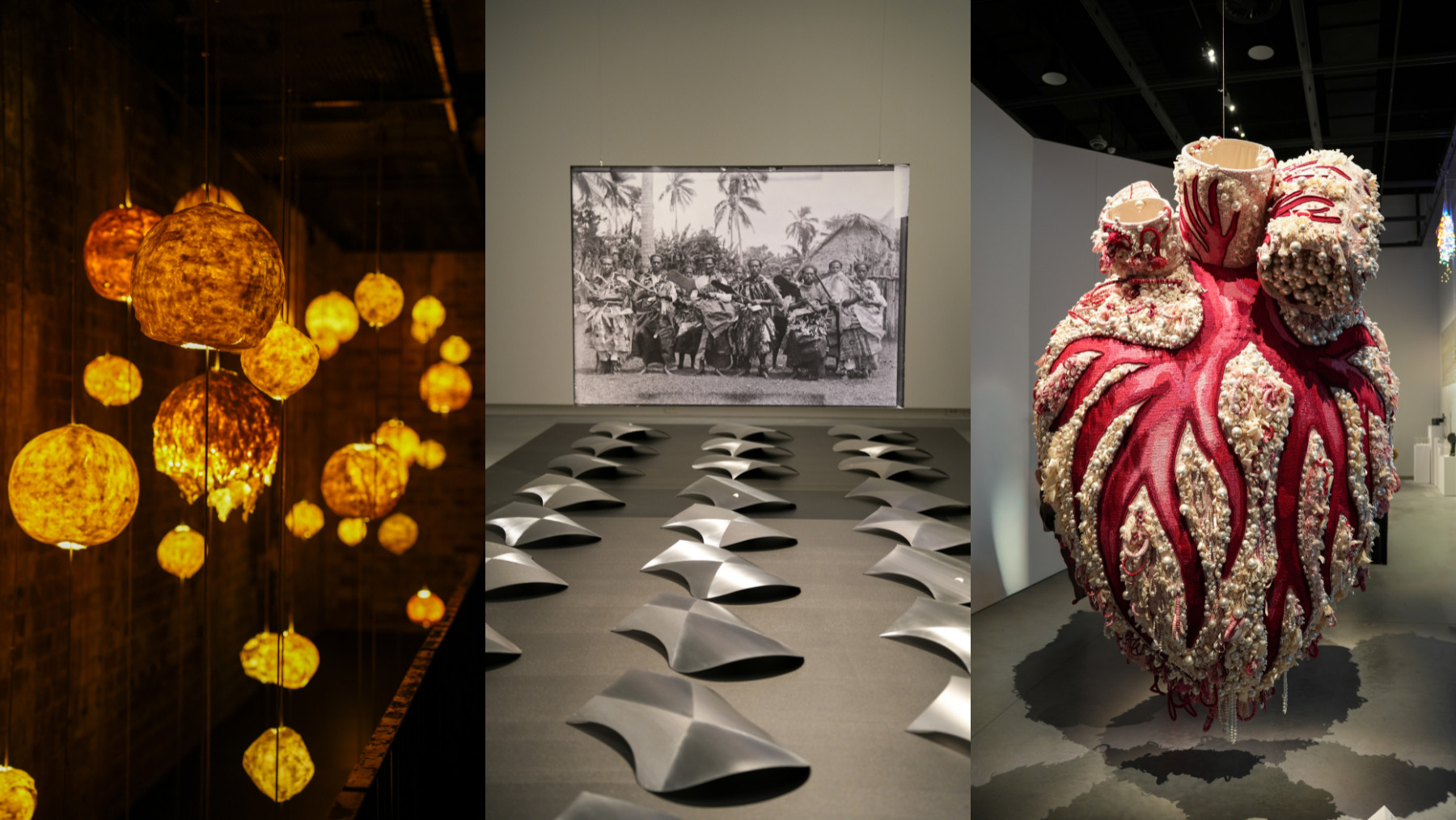
The very open brief gives artists a chance to express their own personal histories and explore how their stories are best shaped and presented. Already, we’re starting to see incredibly diverse modes of expression, from US artist Nikesha Breeze’s 2000-metre-tall baobab tree made of white cotton cheesecloth (White Bay Power Station) to the paintings of Yindijbarndi elder Wendy Hubert using bush tucker to represent a communion with Country, hung in the Penrith Regional Gallery during the Biennale.

Who is Hoor Al Qasimi?
Hoor Al Qasimi is the President and Director of Sharjah Art Foundation, an independent public arts organisation in the UAE, which she founded in 2009 to advocate for the arts around the region, and the world.
Her appointment as the first Arab director of the Biennale of Sydney hasn’t come without controversy. An Emirati princess, she is the daughter of Sultan bin Muhammad Al Qasimi, who once described Israel as “a cancerous growth”. Concerns about another taxpayer-funded arts festival being captured by an “extremist anti-western political agenda” were raised by the Executive Council of Australian Jewry.
Al Qasimi founded the Sharjah Art Foundation (SAF) to build upon the legacy of the biennial initiated in 1993, responding to year-round exhibitions, artist residences and grants to organise a more robust arts scene for the Middle East. Since SAF was founded, Al Qasimi has been seen as an authority on the art world, especially when it comes to the many untold stories that sit behind Emirati history.
Most recently, she has served as curator for Lahore Biennale in 2020, and was 2025’s Artistic Director for the Aichi Triennale in Japan. Her leadership role for the Biennale of Sydney establishes the need for her curatorial voice and oversight as the art world increasingly focuses on truth-telling, lived experience and cultural diversity.
Where is the Biennale of Sydney 2026?
The Biennale of Sydney 2026 takes place across five major sites:
- White Bay Power Station
- Chau Chak Wing Museum at University of Sydney
- Campbelltown Arts Centre
- Lewers: Penrith Regional Gallery
- Art Gallery of NSW
This looks slightly different from 2024’s Biennale, which took place across more venues, including White Bay Power Station and Art Gallery of NSW, as well as the MCA, Artspace, UNSW Galleries and the Chau Chak Wing Museum. Now with a smaller footprint, the Biennale of Sydney 2026 should be more focused and easier to handle for visitors.
White Bay Power Station moves into a more central role
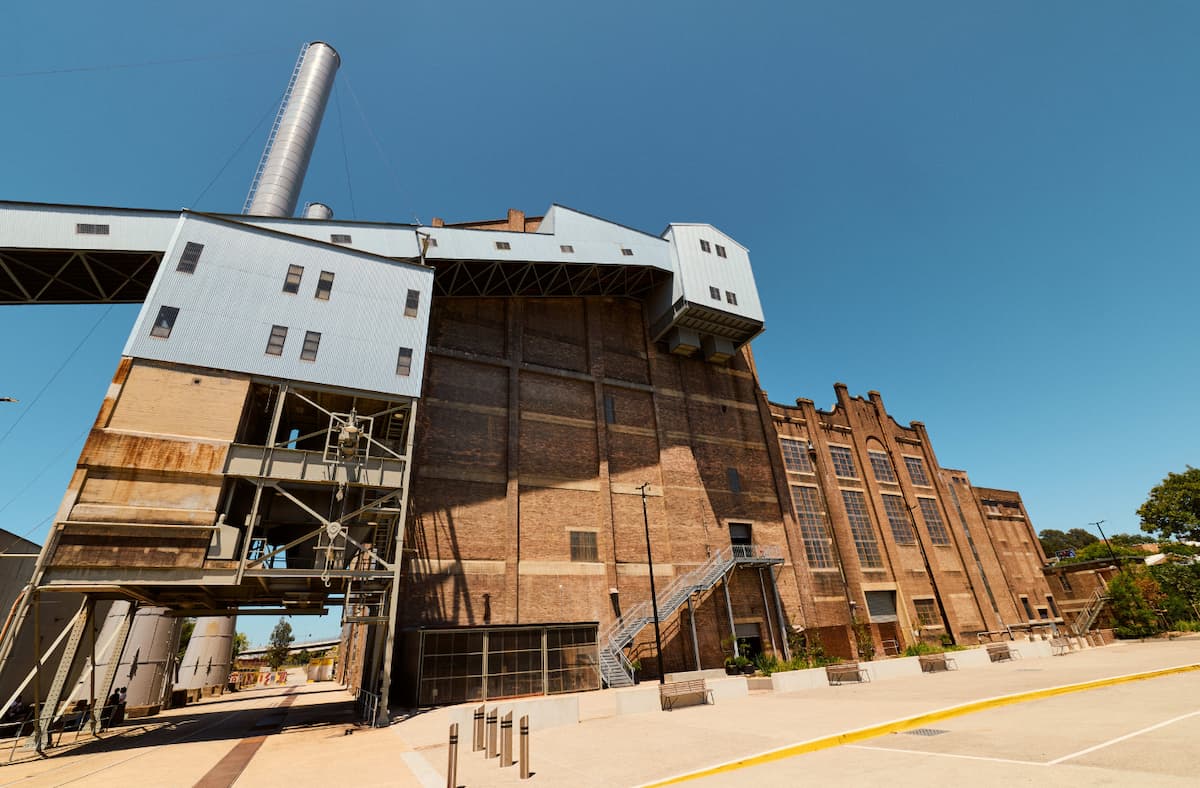
White Bay Power Station has been slowly moving from the periphery into a central role for the arts in Sydney over the past few years. The historic former power station was turned into an events and party hub in 2024, and has since hosted some of the city’s most unique events over the past year.
Now the major industrial venue is one of the five major exhibition sites for the Biennale of Sydney 2026, featuring large-scale installations, weekend foodie markets and designated family days with hands-on workshops, performances and activities.
Behind-the-scenes tours of the White Bay Power Station during the Biennale of Sydney have sold out, but that doesn’t mean you can’t piece together everything this fascinating venue has to offer over the next few months.
My best tip would be to head down on a Saturday or Sunday afternoon, and bring your appetite. The Memory Lane markets will be held on the grounds of White Bay Power Station with a mix of multicultural food vendors, featuring everything from Native Australian to Pakistani, Palestinian, Lebanese, Persian, East African, Italian and Chinese dishes.
Some of the Biennale of Sydney’s largest works can be found here, including Nikesha Breeze’s Living Histories, which is the aforementioned baebab tree, and Joe Namy’s Automobile, a sound-based performance.
It’s a bit trickier to get out to White Bay than it is Circular Quay. White Bay Power Station is located where Robert Street and Mullens Street meet in Rozelle, just off Victoria Road. A bus from the Queen Victoria Building will get you there in less than 10 minutes. You can also take the light rail to Rozelle Bay and walk on over to Rozelle Parklands from there.
The best bus routes to take are the 441 and 442 buses from Queen Victoria Building, York Street, Stand B. During the Biennale of Sydney, route 44 special event Vintage buses will operate on Saturday, Sunday and public holidays, leaving stand B every 20 minutes from 9:45am.

Chau Chak Wing Museum is being used more intensely
For 2026, the Chau Chak Wing Museum at the University of Sydney will be weighted more for the Biennale of Sydney. The institution has come on board as an exhibition partner, hosting works from around 14 artists, including Benjamin Work, Belinda Kazeem-Kamiński and Dorothy Cross.
Artists will highlight marginalised narratives, share untold stories and inspire audiences to rethink how memory shapes identity, belonging, and the creation and celebration of new communities and connections.
Work at the Chau Chak Wing Museum is on display for free throughout the Biennale. The best time to go around be after midday so you miss the morning rush.
Sydney Biennale Venues and Western Sydney Footprint
The Biennale of Sydney features five major exhibition sites: White Bay Power Station, Art Gallery of New South Wales, Chau Chak Wing Museum at the University of Sydney, Campbelltown Arts Centre, and Lewers: Penrith Regional Gallery.
The Biennale of Sydney 2026 looks much different, with a different spread of partner venues. Traditionally, you’ll find a big chunk of the Biennale over on Cockatoo Island. But the past few editions have moved away from using Sydney Harbour’s biggest island.
This means that you’ll have to plan a few Western Sydney days if you want to see all of the Biennale of Sydney this year. I would suggest including the Campbelltown Arts Centre and Penrith Regional Gallery on the same day. Focus on just those two on a Saturday.
And then dedicate the Sunday to exploring closer to the city. Allocate a decent amount of time to the Chau Chak Wing Museum, given it’s much more prominent as a venue this year, and then fill the rest of the day with the Art Gallery of NSW.
Then dedicate an entire day to White Bay Power Station the following weekend. That’s the Biennale of Sydney 2026 done in just three days.
First Nations artists at the Biennale of Sydney
26-year-old Gamilaraay and Biripi man Dennis Golding is just one of many First Nations artists taking part in the Biennale of Sydney 2026. His work, a massive bead maze installed at White Bay Power Station, is a tribute to growing up in The Block, which was a notorious centre of Indigenous communities in Redfern in Central Sydney back in the 90s.
The beads symbolise Redfern’s gentrification and draw parallels to colonisation, using leftover bricks from an Aboriginal flag mural to further the symbolism.
First Nations storytelling is increasingly becoming central to the Biennale of Sydney and how grounded it is in the Australian art scene. Across the program, there are 15 First Nations artists represented, including Gunybi Ganambarr, Carmen Glynn-Braun, and Warraba Weatherall.
Tips for visiting the Biennale of Sydney 2026
There are five major venues at the Biennale of Sydney 2026, and I suggest dedicating three days in total to see them all. You’ll need around 2-3 hours per venue, more for the major site of White Bay Power Station.
Make sure any tours are booked in advance. Entry to these venues are free, but there’s so much more to see and do on the day that planning using the Biennale of Sydney website is the smartest way to make sure you aren’t missing anything.
Remember some key points when it comes to planning:
- Sites are usually busiest early in the morning, so I would suggest saving the big sites like White Bay Power Station until after 12pm. Most people will want to tick off the big ones first and then fan out to the smaller sites. Working this route in reverse would strip away the crowds, giving you longer with each piece.
- There is no Biennale of Sydney app to make planning easier, so do everything via the official Biennale of Sydney website.
- White Bay Power Station is where most of the large-scale installations are now. You’ll likely want to take a lot of photos without tourists in them. In which case, I advise leaving White Bay Power Station until the last stop on your Biennale art crawl. Waiting until the crowds thin out will save you a heap of stress on the day.
- Do make sure to see some of the pieces in Penrith and Campbelltown. Sydney’s art scene has been pushing its Western Sydney institutions heavily as of late, and so you can be sure plenty of this year’s highlights will be located out there to help spread the love around.