- Sydney’s 25th Biennale is mired in controversy.
- But perhaps the worst accusation of all is that it is boring and predictable. Even the controversy is nothing we haven’t heard before.
- Editor in Chief Peter Lynch asks: Is this worth $13 million?
The Biennale of Sydney has, for more than half a century, been one of Australia’s flagship cultural events. It’s a sprawling, ambitious celebration of contemporary art that aspires to place Sydney firmly on the global creative map.
It attracted audiences of 850,000 in 2019 and 771,000 in 2024. This year, its projected attendance is in the hundreds of thousands, with 27,000 international or interstate attendees expected.
But sadly, today’s Australian arts scene has been invaded by those more concerned with chasing trending topics on social media. And as the latest edition of the Biennale unfolds, an uncomfortable question is beginning to surface: is the Sydney Biennale still worth the cost and trouble?
We are saddened to ask the question. Since its inception in 1973, the Biennale has played a vital role in introducing international artists to Australian audiences, elevating local voices, and transforming the city into a living gallery. For decades, it has been a source of civic pride.
But longevity alone is no justification for continuation especially when the event appears increasingly disconnected from the public it is meant to serve.

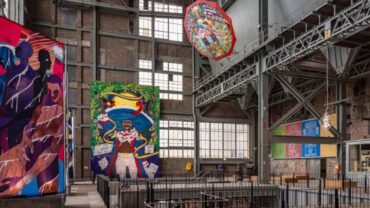
Biennale 2026 at White Bay Power Station
One of the recurring criticisms this year has centred on leadership. Observers and attendees alike have noted what they perceive as a lack of visible presence from the Biennale’s leadership, including its director. Whether entirely fair or not, perception matters in cultural institutions. When audiences feel that those at the helm are distant or disengaged, it feeds a broader narrative that the Biennale is operating within an insular, elite bubble.
It started when Emirati princess and renowned curator Hoor Al Qasimi was absent from the media preview on March 10, 2026, which was attended by dignitaries including NSW Arts Minister John Graham.
A spokesperson said that her absence was a “deliberate curatorial choice” to ensure the media focus remained on the individual artists and their works.

Biennale at White Bay Power Station (Olivia Aldridge-Healey)
Then there is the programming itself. Contemporary art has always courted controversy, and rightly so.
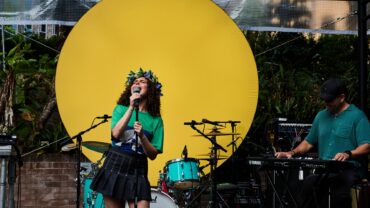
It should challenge, provoke, and spark debate. But there is a fine line between meaningful provocation and predictable posturing. A recent headline-grabbing performance by an overseas DJ, which veered into a highly charged political monologue, struck many as a formulaic grab for headlines.
For critics, it felt like a familiar script: parachute in, make noise, leave. Whether one agrees with the sentiment expressed or not, the broader question is whether such moments genuinely enrich the cultural conversation or simply generate headlines for all the wrong reasons.

DJ Haram (supplied)
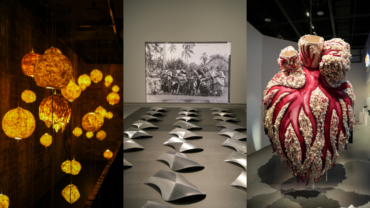
At the White Bay Power Station, arguably the Biennale’s most visually dramatic venue this year, the response to the artworks themselves has been, at best, mixed. The scale of the space demands ambition, yet many visitors have described the installations as underwhelming relative to the setting. When a venue does more of the heavy lifting than the art it houses, something is out of balance.
This is where the financial question becomes impossible to ignore. The Biennale operates on a budget of roughly $13 million, with about a quarter of that coming from the New South Wales government and the rest from private sponsors. This week, PWC withdraw its sponsorship after the incident involving the DJ.
“We entered this partnership to support an experience and series of arts and creative culture events which would be welcoming and inclusive for everyone,” said a company statement.
“Following comments made by a performer at the opening night event, we no longer have confidence that the festival can meet our expectations. We condemn the comments made and reject antisemitism and all forms of hate.”
It costs the City of Sydney and the NSW State Government between $6-$7 million to stage the New Years Eve fireworks. It costs about the same to stage the Sydney Festival, which is more inclusive than the Biennale. Now major sponsors are leaving the Biennale, expect calls for a bigger government contribution.
The hybrid funding model should reflect a shared commitment to cultural investment. In practice, it raises questions about accountability.
If private partners lose confidence, the burden inevitably shifts. Taxpayers may be asked to fill the gap, effectively underwriting an event that many feel is no longer delivering commensurate value. In a city grappling with cost-of-living pressures, housing shortages, and strained public services, that is a difficult sell.
It would be overly simplistic and unfair to dismiss the Biennale entirely. Not all of it feels disconnected or contrived.
Reports from satellite programs in Penrith and Blacktown suggest something more grounded and authentic is taking place there. These events appear to resonate more directly with local communities, offering art that feels relevant rather than imposed. If anything, they hint at what the Biennale could be at its best: inclusive, engaged, and genuinely reflective of the city’s diversity.
This contrast is telling. It suggests that the problem is not the concept of the Biennale itself, but rather its current execution and priorities. When the centre feels out of touch but the margins feel alive, it may be time to rethink where the focus lies.
So, is the Sydney Biennale worth it? The answer, increasingly, is: not in its current form.
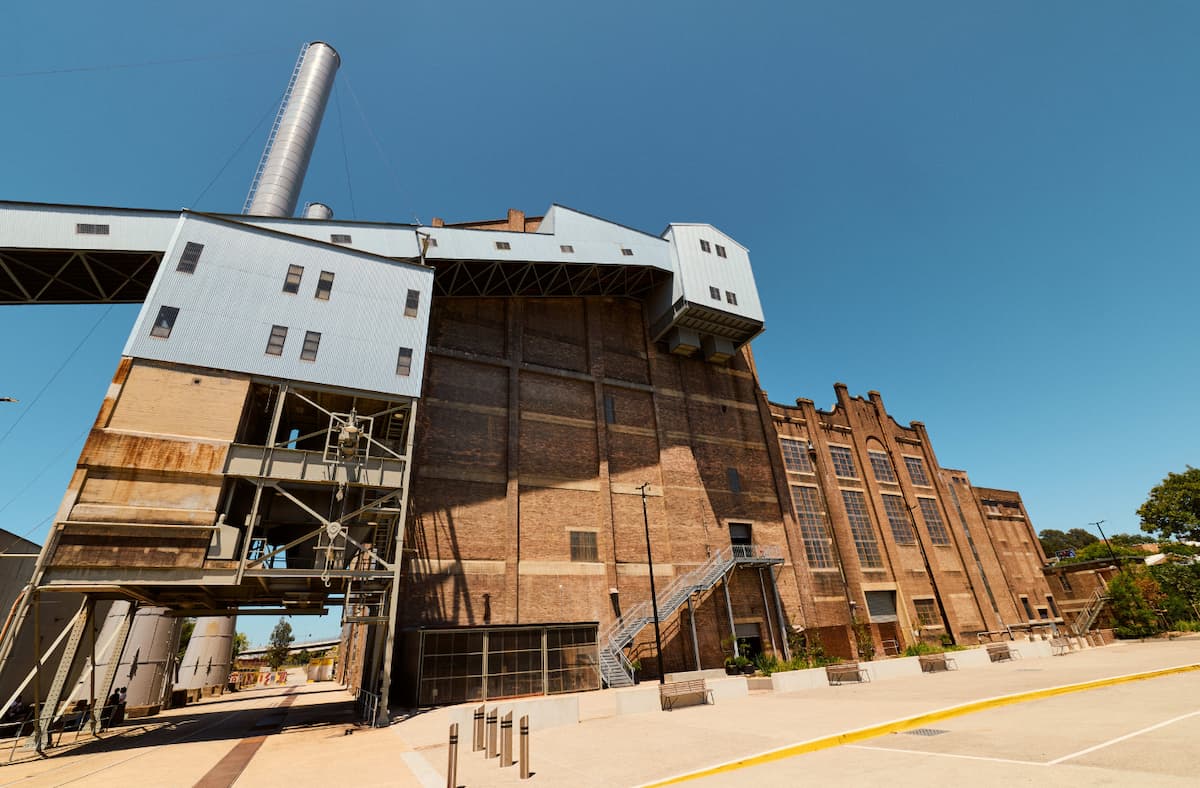
White Bay Power Station (supplied)
A cultural institution of this scale must justify both its cost and its cultural impact. It must engage broad audiences, not just niche art-world circles. It must surprise and inspire, not rely on predictable controversy. And it must demonstrate leadership that is visible, accountable, and connected.
After 53 years, it may be time for a serious reset. That does not necessarily mean abandoning the Biennale altogether, but it does mean asking hard questions about its purpose, structure, and funding.
Could the same $13 million be deployed in ways that reach more Sydneysiders? Could it support a wider range of local artists, or fund year-round cultural initiatives rather than a single, concentrated event? Could it enhance the state’s cultural reputation in ways that feel more inclusive and less insular?
These are not anti-art questions. On the contrary, they stem from a belief that art should matter deeply to the communities it serves.
The Biennale has had a remarkable run. But even the most storied institution must evolve or risk becoming, as some critics have suggested, an expensive relic. More akin to a Monty Python sketch than a meaningful cultural force.
Sydney deserves a cultural flagship that feels vital, relevant, and worth the investment. The question now is whether the Biennale is able to fulfil that role again.
For more, go here.